
Understanding Forex Trading Basics for Nigerians
Learn forex trading essentials in Nigeria 🇳🇬: understand markets, trading strategies, broker choices, risks & platforms to make profit from currency exchange rates ₦.
Edited By
Edward Shaw
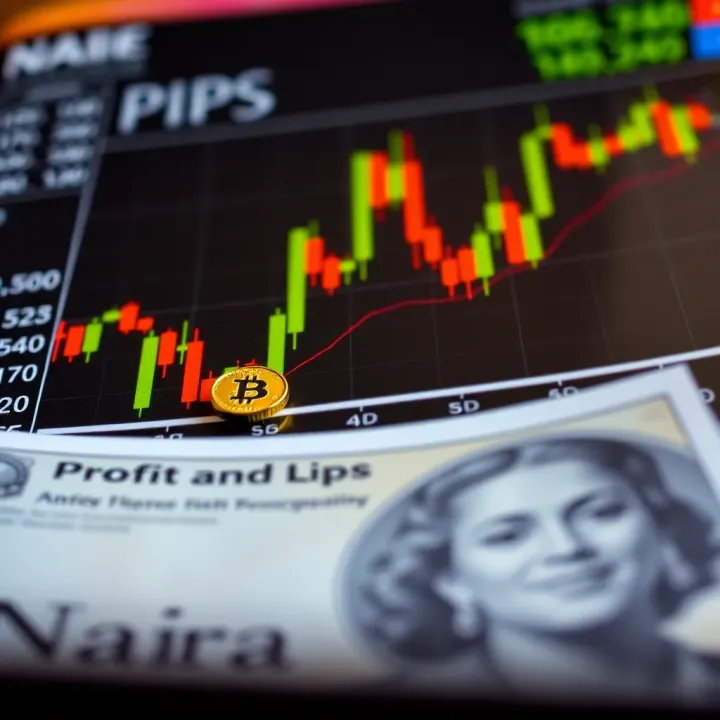
When it comes to forex trading, especially for Nigerian traders, understanding pips is key to grasping how profits and losses really work. A pip, short for "percentage in point," is essentially the smallest price move you can measure in a currency pair. It acts like the yardstick forex traders use to track how currency values change against one another.
In practical terms, think of a pip as the difference between two prices, such as when the USD/NGN exchange rate moves from ₦415.00 to ₦415.50. Here, the change of 0.50 in price represents 50 pips (since a pip often corresponds to the fourth decimal place, or the second in pairs including the Japanese yen).
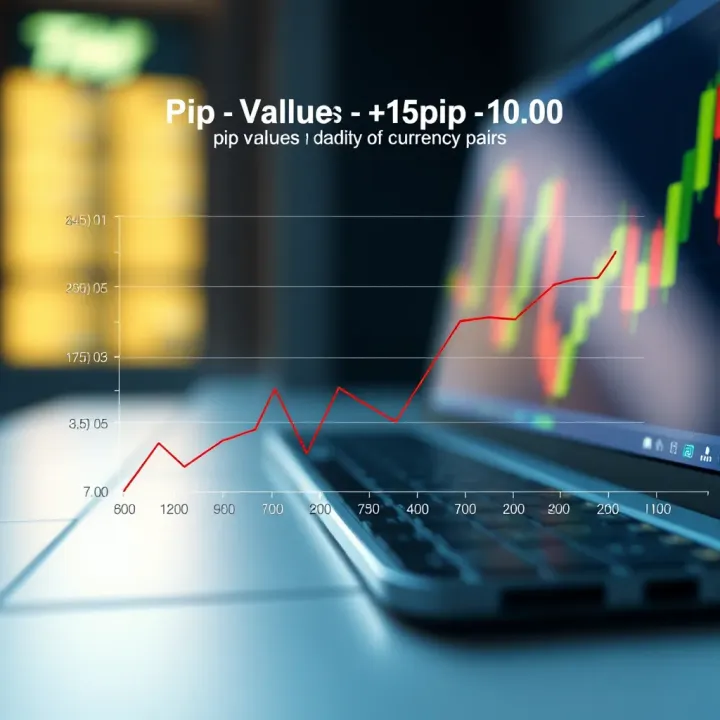
Knowing how to calculate and interpret pips helps traders:
Determine the exact gains or losses on trades.
Set stop-loss and take-profit levels precisely.
Compare different currency pairs even if their values vary widely.
For example, if you bought US dollars at ₦415.00 and sold at ₦416.00, those 100 pips would translate to real naira profit depending on your trade size.
Understanding pip value is especially helpful in volatile markets like forex where naira exchange rates can swing significantly overnight.
Pip value depends on the currency pair and the size of your trade (called the lot). Most retail trades deal in micro, mini, or standard lots:
Micro lot: 1,000 units of base currency
Mini lot: 10,000 units
Standard lot: 100,000 units
If trading USD/NGN and you open a mini lot at ₦415, a 1-pip move of 0.0001 means:
Pip value = Lot size × One pip = 10,000 × 0.0001 = 1 unit of base currency (USD) per pip
But since Nigerian traders think in naira, you multiply the pip value by the USD/NGN rate to get naira value per pip.

## Summary

Pips are the measuring sticks forex traders use to track currency price movements. For [Nigerian traders](/articles/introduction-forex-trading-nigeria/), converting pip movements into naira gains or losses helps understand real-world impact. Mastering pip calculation guides better trade decisions, risk management, and ultimately, proper handling of your ₦ investment in the forex market.

In the next sections, we'll break down pip calculations further and explore how pip values differ across currency pairs commonly traded by [Nigerians](/articles/understanding-forex-trading-essentials-nigeria/).

## Defining Pips and Their Role in Forex Trading

Understanding what a pip is forms the very foundation of forex trading knowledge. Without grasping this key concept, traders in Nigeria—and anywhere else—may struggle to measure price changes accurately or assess their gains and losses effectively. The term "pip" stands for "percentage in point" or "price interest point" and represents the smallest price movement in a currency pair.

### What is a Pip in Currency Trading?

A pip normally equals 0.0001 for most currency pairs quoted to four decimal places. For example, if the exchange rate for EUR/USD moves from 1.1200 to 1.1205, it has moved 5 pips. In pairs involving the Japanese yen (JPY), one pip is equivalent to 0.01 because these pairs are quoted to only two decimal places. So if USD/JPY rises from 110.15 to 110.35, that is a 20-pip movement.

Why does this matter? Pips allow traders to express changes in currency prices simply and consistently. Instead of saying "the rate rose from 1.1200 to 1.1205," traders say "prices went up by 5 pips," which is more straightforward and standard across markets.

### Why Pips Matter for Forex Traders

For Nigerian traders dealing heavily in foreign exchange, pips are the yardstick for measuring trading results. Every change in price is counted in pips, which directly affects how much profit or loss is realised. Consider a trader buying USD/NGN at a rate; if the market moves favourably by 50 pips, that translates into ₦ gains depending on the trade size.

Using pips helps traders to:

- **Set clear entry and exit points**: By placing stop loss or take profit orders a fixed number of pips away, traders can manage risks and rewards systematically.
- **Calculate risk versus reward**: Traders determine how many pips they stand to gain relative to how many pips they risk losing in each trade.
- **Compare different currency pairs**: Because a pip’s value varies with pairs, understanding pips helps in evaluating opportunities across currencies, including the Nigerian naira.

> For Nigerian forex traders, mastering pips means you don't just guess market moves—you quantify and manage them with precision.

In short, knowing [how to](/articles/how-to-learn-forex-trading-nigeria/) read and use pips turns raw price data into actionable insights, enabling you to trade smarter and with confidence in the dynamic forex market.

## How to Calculate Pips and Understand Their Value

Calculating pips and knowing their value is fundamental for any forex trader, especially if you handle trades involving the naira or foreign currencies. Pips tell you exactly how much your trade moved, allowing for practical measures of profit, loss, and risk management.

### Basic Calculation of Pips in Major Currency Pairs

In forex, a pip usually refers to the smallest price move a currency pair can make, typically the fourth decimal place for most major pairs like EUR/USD or GBP/USD. For example, if EUR/USD shifts from 1.1000 to 1.1001, that’s one pip.

However, some currency pairs that involve the Japanese yen calculate pips differently, usually at the second decimal place. So, if USD/JPY moves from 110.00 to 110.01, that equals one pip. This difference matters when calculating gains or losses and can affect how you set your stop-loss or take-profit targets.

Let’s say you trade USD/NGN at 415.50 and it moves to 415.60. The move is 10 pips (because the tenth decimal place is the pip for this pair). Understanding how pips are counted helps you grasp how far the price has moved in practical terms.

### Using Pip Values to Measure Profit and Loss

Knowing the pip value helps you translate price movements into real money, which is critical in managing your trades and capital.

To calculate the pip value, you need to consider the lot size, currency pair, and exchange rate. For standard lots (100,000 units), one pip in EUR/USD is worth $10. For smaller lots like micro lots (1,000 units), that value decreases proportionally — $0.10 per pip.

In Nigeria, since many traders use naira in their accounts, converting pip value to naira is the next step. For example, if you trade one micro lot of EUR/USD and the pip value is $0.10, and your current dollar-to-naira rate is ₦460/$1, then each pip would be worth ₦46.

> *Understanding pip values in your local currency enables better control over potential profits and losses. It helps avoid surprises during volatile market swings.*

Additionally, different currency pairs have different pip values because of their exchange rates and decimal conventions. Traders need to be aware of this to avoid misjudging their risk exposure.

In practice, many Nigerian traders use trading platforms like MetaTrader or brokers such as FXTM and InstaForex, which usually calculate pip values automatically. Still, having a grasp of the manual calculation is essential for double-checking figures and improving your trading strategy.

By mastering pip calculation and its value, you improve your ability to manage risks and make informed decisions, crucial for success in the forex markets, whether you trade USD/NGN or other pairs.

## Variations in Pips Across Different Currency Pairs

Understanding how pips vary across currency pairs helps traders make better decisions, especially when managing risk and estimating potential profits. Each pair can behave differently because of how pips are calculated and how market forces affect price movements. This is vital knowledge for Nigerian traders who want to handle their funds effectively, especially with the naira’s volatility and the influence of global events.

### Standard Pips vs Fractional Pips (Pipettes)

Standard pips represent the smallest whole-unit change in currency price, typically the fourth decimal place (0.0001) for major pairs like USD/EUR or GBP/USD. For example, if EUR/USD moves from 1.1350 to 1.1351, that’s a change of one standard pip. Fractional pips, or pipettes, go a step further—measuring one-tenth of a standard pip, usually at the fifth decimal place (0.00001).

This finer measurement helps traders pinpoint smaller price variations, which is useful in high-frequency trading or scalping strategies. For instance, MT4 and MT5 platforms popular in Nigeria show prices with these pipettes, allowing for more precise entry and exit points. Knowing the difference between standard pips and pipettes aids in interpreting price charts and managing orders more accurately.

### How Volatility Influences Pip Movement

Volatility greatly impacts pip movements across currency pairs. Pairs involving commodities or emerging market currencies, like USD/NGN or USD/ZAR, tend to show larger and quicker pip swings compared to stable pairs such as USD/JPY or EUR/USD. This means the potential gains or losses can be more significant in volatile pairs but so is the risk.

For example, during periods of political uncertainty in Nigeria or changes in CBN policies affecting naira liquidity, USD/NGN can jump several hundred pips within hours. Traders must take such shifts seriously by adjusting their stop-loss levels and trade sizes accordingly. Conversely, less volatile pairs might move slower, providing steadier but smaller pip changes.

> Assessing volatility in pip movements helps you match your trading style and risk appetite. If you prefer calmer markets, focus on major pairs; if you like excitement and can manage higher risks, pairs with bigger pip fluctuations might suit you better.

In practical terms, always watch the economic calendar and local news for events that can trigger sudden volatility. For Nigerian traders using platforms like Kuda or OPay for trading, understanding these pip variations guides better planning, so your hard-earned ₦ stretches further rather than getting wiped out by sudden price jolts.

## Applying Pips in Practical Trading Strategies

In forex trading, pips are not just abstract numbers; they play a critical role in shaping your trading decisions. Nigerian traders can use pips to set clear exit points and manage risk effectively. Understanding how to apply pips in your trading tactics helps control losses and secure profits, especially in the volatile market affected by global events and local naira fluctuations.

### Setting Stop Loss and Take Profit Based on Pips

One essential way to use pips is in setting stop loss and take profit orders. Stop loss limits the amount you lose on a trade, while take profit locks in gains once a target pip movement is reached. For example, suppose you buy EUR/USD at 1.1000 with a plan to take profit after 50 pips and set stop loss at 30 pips. This means if the price hits 1.1050, your trade closes automatically with profit; if it drops to 1.0970, it closes to prevent further loss.

This method helps Nigerian traders stick to their strategy without letting emotions hijack decisions. Especially with naira’s instability, clear stop loss and take profit levels give better control of risk and reward. Plus, using pips allows you to adjust these levels flexibly according to market volatility.

### Risk Management Using Pips

Risk management is the backbone of sustainable forex trading, and pips make this practical. When you know the pip value per trade size, you can calculate exactly how much you risk versus potential reward. For instance, if one pip equals ₦500 and you set a stop loss 40 pips away, the maximum loss is ₦20,000. This clarity helps you avoid betting too much on any single trade.

Proper risk management involves keeping your risk per trade to a small percentage of your total capital — commonly 1-2%. So, if you have ₦1,000,000 in your trading account, risking ₦10,000 on one trade means setting your stop loss and trade size accordingly in pips and units.

> Clear pip-based planning makes your forex trades disciplined, reducing the chance of wiping out your capital during unexpected market swings.

In practice, successful Nigerian traders track pip movements alongside economic news, oil prices, and CBN policies because these affect currency volatility. Combining pip strategy with local market knowledge improves decision-making and helps avoid costly mistakes.

By treating pips as the measuring stick for your trading goals and risk limits, you put yourself in charge of your forex journey rather than guesswork or luck. It’s a practical approach, especially when trading pairs involving the naira or major global currencies like the dollar or euro.

## Common Questions and Misconceptions About Pips

Pips are the heartbeat of forex trading, but many Nigerian traders often carry some misunderstandings about their practical value. Clarifying common questions and misconceptions helps traders avoid costly mistakes and sharpen their strategy. For example, some believe that chasing a higher number of pips guarantees bigger profits, without considering trade size or leverage. Others don’t understand how local market conditions like naira volatility or restricted forex liquidity affect pip value and overall trading costs. This section addresses these points head-on, offering clear insights tailored to Nigerian forex traders.

### Does a Higher Number of Pips Always Mean Better Profit?

Not necessarily. Many traders assume that winning more pips automatically leads to higher profits, but that’s only part of the story. Profit depends on both the number of pips gained and the size of your position. For instance, gaining 20 pips on a ₦100,000 trade can be more profitable than 100 pips on a ₦5,000 trade.

Also, the currency pair and its pip value matter. For example, trading USD/NGN versus EUR/USD involves different pip values because of their exchange rates and liquidity.

Leverage use also influences profit potential but can magnify losses. A trader who gains 50 pips with high leverage may see better returns than one with 100 pips on a smaller trade, but the risk rises significantly.

In practical terms for Nigerian traders, it’s wiser to focus on a balanced risk-to-reward ratio and position sizing instead of blindly chasing large pip numbers.

### Pips and Nigerian Forex Market Conditions

Local market realities shape how much pips count for Nigerian forex traders. The naira’s ongoing volatility affects pip movement on USD/NGN pairs much more than on pairs with major global currencies like EUR/USD.

For example, sudden policy changes or Central Bank of Nigeria (CBN) interventions can cause sharp swings, making typical pip values unreliable in the short term. This means traders must watch the news closely and adjust their pip targets accordingly.

Furthermore, liquidity can be lower in some naira pairs, which creates wider spreads and slippage. That means you might pay more in transaction costs relative to pip gains compared to more liquid forex pairs.

Nigerian traders also face the added factor of exchange control policies, which can limit access to certain forex markets or platforms. This affects how easily and quickly you can enter or exit trades based on pip movement.

> **Understanding how local factors influence pips helps Nigerian traders manage expectations and plan trades with realistic profit targets and loss limits.**

By recognising these conditions, you can avoid common pitfalls and design strategies that work in the Nigerian context rather than just importing global advice without adaptation.

In summary, pips remain a key measure, but for Nigerian traders, the focus should be on combining pip knowledge with smart money management and a clear eye on local forex market dynamics.Learn forex trading essentials in Nigeria 🇳🇬: understand markets, trading strategies, broker choices, risks & platforms to make profit from currency exchange rates ₦.
📉 Discover how forex trading signals guide Nigerian traders to spot real opportunities in volatile markets. Learn trusted sources, types of signals, and risk tips to grow your ₦ safely.
Discover practical tips on navigating Forex Trading Majalahtaujih in Nigeria 🇳🇬. Manage risks, access local platforms, and thrive in the ₦ market effectively 💹.
Learn how to trade forex in Nigeria 🇳🇬 with this practical guide — explore currency markets, risks, trading platforms, and factors affecting exchange rates in naira trading.
Based on 13 reviews