
Benefits of Effective Risk Management
Discover how proactive risk management helps individuals and organisations in Nigeria reduce losses, enhance decisions, and ensure stability 📊🔒
Edited By
David Chapman
Risk management is a vital part of running any business or project, especially here in Nigeria where uncertainty can come from many quarters—economic shifts, power outages, regulatory changes, and even market volatility. Understanding how to manage risk effectively doesn’t just protect a business from losses; it also provides a clearer roadmap for smarter decision-making.
The risk management process is straightforward but demands discipline. It begins with identifying potential risks that could negatively affect your operations. For example, a Lagos-based trader might spot risks like fluctuating exchange rates or unreliable supply from local producers. Without identifying these threats early, they could lead to delays or extra costs.

After identifying risks, the next step is analysing their potential impact and likelihood. This means putting a value on how much a risk event might cost and how often it could occur. This helps entrepreneurs focus on risks that truly matter. For instance, while an okada rider might be concerned about daily road accidents, a fintech startup might prioritise cyber breaches over physical risks.
Planning risk responses is next—deciding how to handle each risk. Should you avoid it entirely, reduce its impact, transfer the risk through insurance, or accept it as part of doing business? Nigerian businesses often combine these approaches; a small store could insure stock against fire and also install security to reduce theft chances.
Implementing controls follows—to ensure risk responses are put into action. That could mean setting rules, training employees, or using technology to monitor activities. For example, fintech companies like Paystack build compliance systems that flag suspicious transactions, limiting fraud.
Finally, constant monitoring and review are essential. Business environments change quickly in Nigeria, so risk management must adapt. Keeping an eye on outcomes lets companies adjust their plans and stay ahead.
Effective risk management isn’t a one-time effort. It’s a continuous cycle that improves business resilience and supports more confident decisions.
In summary, following these steps—risk identification, analysis, response planning, control implementation, and monitoring—helps Nigerian traders, investors, brokers, and entrepreneurs guard against losses and seize growth opportunities with greater assurance.
Identifying risks and their sources is the first vital step in managing risks effectively. Without clear identification, businesses, especially in Nigeria's dynamic market environment, could remain exposed to unexpected shocks, leading to losses or missed opportunities. Knowing what risks exist and where they come from enables traders, investors, and entrepreneurs to tailor strategies that protect assets and support growth.
Operational risks stem from the day-to-day activities of running a business. These include failures in internal processes, employee errors, or system breakdowns. For example, a manufacturing firm in Lagos might face production delays due to erratic power supply, which disrupts machinery operation. Operational risks also cover supply chain issues, like a delivery delay caused by traffic congestion impacting stock availability for retail outlets. Understanding these risks helps firms put controls in place to reduce downtime and improve efficiency.
Financial risks relate to uncertainties in a company's finances, such as cash flow problems, currency fluctuations, or credit defaults. A Nigerian exporter dealing with payment in US dollars may face losses due to naira depreciation if they do not hedge their foreign exchange exposure. Similarly, a startup relying heavily on loans could face difficulty meeting obligations if interest rates rise sharply following a Central Bank of Nigeria (CBN) monetary policy change. Recognising financial risks early helps businesses plan better, reduce exposure, and secure financial stability.
Market risk involves losses due to changes in market conditions affecting prices, demand, or competition. For instance, a trader importing electronics faces market risk if global prices fall, leading to reduced sales. Credit risk is the danger of customers or partners failing to pay debts, a common situation in Nigeria's informal sectors. For example, a wholesaler supplying goods to small retailers might struggle if they default on payments. Being aware of these risks prompts stronger credit checks and adaptive pricing strategies.
Legal and compliance risks arise from failing to adhere to laws or regulations, which can result in penalties or shut-downs. Nigerian companies must track tax laws, employment regulations, and industry-specific standards determined by bodies like FIRS or NAFDAC. A food processing company that neglects NAFDAC registration might face product bans, hampering business operations. Identifying these risks ensures adherence to legal frameworks, avoiding costly disputes or sanctions.
Brainstorming sessions gather diverse teams to list possible risks based on experience and current knowledge. This method encourages open discussion, making it easier to spot hidden or emerging risks. For example, a fintech startup might conduct a session involving developers, marketers, and compliance officers to map out risks from cyber threats to regulatory changes. These sessions promote collaborative thinking and ensure different viewpoints shape the risk overview.
Checklists simplify risk identification by providing a structured format to consider common risk areas relevant to the business. Questionnaires can capture detailed input from staff or partners on specific concerns. A logistics company might use checklists to review vehicle maintenance, driver training, or route hazards systematically. These tools standardise risk detection and prevent overlooking known pitfalls.
Engaging stakeholders such as suppliers, clients, regulators, or industry experts brings external perspectives into the risk identification process. These groups often highlight risks invisible to internal teams, like regulatory shifts or market trends. For instance, a Nigerian agricultural exporter consulting with export agents and government agencies can anticipate policy changes affecting export tariffs. Collaborative consultations deepen understanding and build risk awareness beyond the organisation.
Examining past incidents, financial reports, or market trends uncovers recurring risks and patterns. For example, a Nigerian bank reviewing previous fraud cases or loan defaults can pinpoint vulnerable areas requiring stronger controls. Similarly, a retail business studying sales fluctuations during ember months may anticipate and prepare for income volatility. Using historical data grounds risk management decisions in real-world evidence.
Identifying risks thoroughly lays the foundation for managing them successfully. Nigerian businesses that invest effort here gain clarity and control, positioning themselves to navigate uncertainties with confidence.
Effective risk identification reduces surprises.
Variety of risks require different detection methods.
Practical examples help relate risks to everyday business.
This initial step in risk management not only protects resources but supports smarter, faster decision-making in Nigeria's competitive business environment.
Assessing and measuring risk impact is a critical step in effective risk management, particularly for traders, investors, brokers, and entrepreneurs operating in Nigeria’s dynamic market. This phase helps businesses understand which risks have the highest likelihood of occurring and their potential consequences. Without proper assessment, resources may be wasted managing less significant risks while severe threats go unnoticed.
For example, a Lagos-based retailer might find that supply chain delays due to fuel scarcity pose a greater threat to business continuity than occasional power outages, even if both cause disruptions. Quantifying such differences allows firms to prioritise risk responses appropriately. This part of the process gives a clearer picture of vulnerabilities and informs smarter decision-making.
Qualitative analysis relies on descriptive assessment to estimate risks, often using expert judgment or stakeholder input. For instance, a startup fintech company might assess the risk of regulatory changes based on opinions from legal advisors and industry experience. This approach suits situations lacking concrete data but demands careful interpretation to avoid bias.
On the other hand, quantitative analysis applies numbers and statistics to measure risk probability and impact precisely. A Nigerian manufacturing firm calculating the financial loss from equipment failure over time uses historical breakdown records and cost figures for this method. Quantitative analysis is valuable when reliable data sets exist, enabling more objective priority setting.
Risk scoring assigns numeric values to risks based on likelihood and severity, offering a simple way to compare multiple threats at a glance. For example, an agribusiness assessing climate-related risks might rate drought probability at 0.6 and crop-loss impact at ₦50 million, creating a score that informs focus areas.
Ranking these scores helps businesses channel effort and investment toward high-scoring risks first. This clear prioritisation reduces the chance of missing critical risks that could cause significant financial or operational damage.
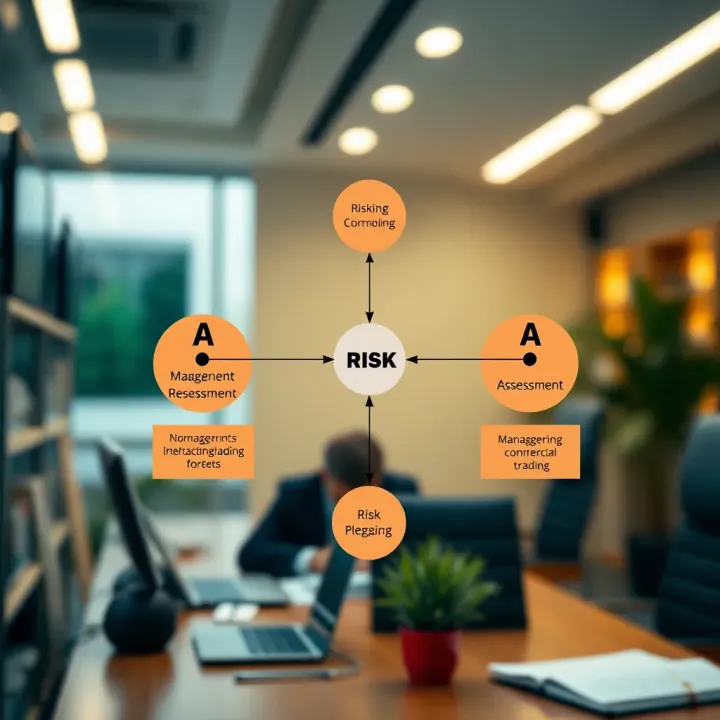
A risk matrix visualises risk levels by combining probability and consequence scales, often arranged in a grid. For example, a tech startup might plot cybersecurity breach risk as high probability but moderate impact, placing it in the matrix to decide mitigation steps.
This tool aids quick understanding for teams and management, enabling discussions grounded in visual data. It also supports regulatory compliance by documenting risk assessments transparently.
SWOT (Strengths, Weaknesses, Opportunities, Threats) is a straightforward tool to explore internal and external factors affecting risk. A local oil company could use SWOT to identify weaknesses like ageing infrastructure and external threats like fluctuating crude prices.
By outlining these factors, businesses spot vulnerabilities alongside potential advantages, which informs balanced risk strategies. It’s especially useful early in the assessment phase for broad insight.
Scenario analysis examines different risk outcomes by simulating varied conditions. For instance, an exporter might consider scenarios including currency devaluation, border closures, or increased tariffs, forecasting how each changes profitability.
Sensitivity analysis digs deeper by testing how changes in specific variables (like interest rates or fuel prices) affect business results. These techniques help organisations prepare for uncertainty by revealing risk-response priorities under diverse conditions.
More advanced statistical models, such as Monte Carlo simulations or regression analysis, offer detailed projections of risk probabilities and impacts. A Nigerian bank could run Monte Carlo models to estimate credit risk across loan portfolios, generating probable loss ranges with confidence levels.
While demanding good data and expertise, statistical models provide robust, data-driven foundations for risk decisions. This sophistication is often necessary for large financial institutions and high-value projects but may be less practical for smaller firms.
Effective assessment and measurement turn vague dangers into concrete priorities. Understanding both the chance of occurrence and the severity of consequences equips businesses to allocate resources wisely and reduce costly surprises.
Planning risk responses is critical in the risk management journey. It turns the identification and assessment of risks into actionable steps that can shield a business or investment from costly surprises. Without this phase, potential losses may spiral out of control, especially in Nigeria’s volatile markets where economic shifts or regulatory changes happen suddenly. A solid plan ensures resources and efforts focus on the most pressing threats in a practical, manageable way.
Avoidance means steering clear of activities that introduce avoidable risks. For instance, a stockbroker might avoid dealing in highly speculative penny stocks known for sharp price swings and limited liquidity. While this approach can limit profit opportunities, it effectively cuts off exposure to significant downside risk early.
For entrepreneurs, avoiding risks might translate to declining contracts in unstable regions or refusing to stock products prone to spoilage due to unreliable cold chains. It’s a straightforward method but requires sound judgment to balance missed chances against safety.
Reduction works by lessening the impact or likelihood of risks rather than dodging them completely. For example, a fintech startup in Lagos might implement multi-factor authentication to reduce cyberattack risks. Though it can’t guarantee zero breaches, it lowers the probability and potential fallout.
Similarly, a trader could use stop-loss orders to limit capital loss on volatile commodities. Reducing risks often involves process improvement, training, or technology investments. It balances risk and opportunity, making it a favoured strategy in dynamic markets.
Sharing or transferring risk means spreading or passing it to another party, often through insurance or partnerships. A construction company investing in expensive machinery might get insurance to cover theft or damage, thus transferring the financial impact to the insurer.
In business deals, joint ventures help share operational risks among partners. While sharing doesn’t eliminate risk, it cushions the blow and enables firms to undertake projects they might avoid solo.
Sometimes, risks are too minor or unavoidable to address actively. Acceptance involves recognising such risks and preparing to handle the outcome if they materialise. For example, a trader might accept minor currency fluctuations when dealing in naira but monitor for sudden large shifts.
This strategy is practical when the cost of mitigating risk outweighs the potential loss. Acceptance requires constant vigilance and contingency readiness to act promptly if conditions worsen.
Effective risk management starts with clear priorities. Not all risks demand equal attention; some threaten core business functions, while others carry less damage. Prioritising helps Nigerian businesses allocate limited resources smartly—focusing first on risks that could cause significant financial loss or regulatory penalties.
For example, an agricultural exporter might prioritise risks tied to export regulation changes over minor operational glitches. Priorities should be reviewed regularly as market conditions evolve.
Assigning clear ownership ensures risk responses aren't vague wishes but concrete actions. Each risk response should have a designated person or team accountable for implementation and follow-up.
In a bank, for instance, the compliance unit might handle legal risk controls, while the IT department manages cybersecurity responses. Well-defined roles improve accountability, streamline communication, and avoid overlaps or gaps.
Risk mitigation often needs funding, manpower, and technology. Resource planning matches the required tools with the budget and capacity available. It might mean investing in training for staff on fraud detection or buying software for inventory tracking.
In Nigeria’s context, where capital and expertise sometimes face constraints, businesses must plan resources to get the biggest impact at the lowest cost. Efficient resource allocation reduces waste and strengthens the entire risk defence system.
Proper planning of risk responses bridges the gap between knowing risks exist and actually controlling their effects — a must for traders, investors, and entrepreneurs aiming to protect and grow their ventures in Nigeria’s fast-moving economy.
Implementing risk control measures moves a business from planning to action, turning strategies into real-world operations that reduce losses and improve resilience. Without implementation, even the best risk plans stay theoretical. Nigerian traders, investors, and entrepreneurs must ensure these measures integrate smoothly into daily operations to handle risks effectively and keep businesses agile in a fluctuating market.
Clear communication is the backbone of applying risk control. Every stakeholder, from frontline staff handling transactions to top management overseeing strategy, needs to understand their role in risk management. For example, if a fintech company introduces new fraud detection protocols, thorough training ensures the staff can identify suspicious activities promptly, reducing potential losses.
Training should be practical and continuous, not just a one-time event. Regular workshops or online modules keep teams updated on emerging risks, especially in sectors like trading and investment where market conditions shift quickly. This approach ensures everyone stays alert and ready to act.
Risk control often requires tweaking existing routines to close gaps and improve safety nets. Consider a logistics company that reviews its delivery routes after repeated vehicle thefts. Changing routes, adding GPS tracking, or adjusting driver's schedules are practical steps for risk mitigation. Each adjustment reflects learning from past incidents and anticipates future threats.
Such process changes might initially slow operations but pay off by preventing costly disruptions. Consistent review and flexibility enable businesses to adapt controls to evolving challenges such as regulatory changes or supply chain issues common in Nigeria.
Technology plays a vital role in controlling risks efficiently. Automated systems reduce human error and flag anomalies in real time. For example, investment firms in Lagos increasingly use algorithmic tools to monitor portfolio risks, instantly alerting managers to market swings.
Additionally, mobile apps that combine customer data with fraud alerts help banks and payment platforms like Paystack or Flutterwave build robust defences. Implementing reliable tech solutions requires upfront investment but protects businesses from losses worth several millions of naira in the medium to long term.
Carrying out regular audits verifies whether risk control measures work as intended. Scheduled internal audits in manufacturing plants or retail chains often identify compliance gaps, outdated controls, or emerging vulnerabilities. Nigerian businesses, especially SMEs, can leverage audits to optimise resource use and avoid penalties.
Besides internal checks, independent external audits provide unbiased assessments. For instance, financial houses regulated by the Securities and Exchange Commission (SEC Nigeria) depend on external audits to demonstrate transparency and reassure investors.
Keeping up with Nigeria’s evolving regulatory framework is non-negotiable for risk control. Compliance protects companies from fines and operational shutdown. For instance, trading platforms must comply with Central Bank of Nigeria (CBN) guidelines on electronic payments to avoid losing licences.
Regular updates and training on laws such as the Nigerian Data Protection Regulation (NDPR) help safeguard customer data, preventing reputational and legal risks. Establishing a compliance team or appointing a risk compliance officer improves vigilance.
A risk control system is incomplete without a feedback mechanism. Collecting inputs from employees, customers, and auditors helps spot weaknesses early. For example, a bank noticing frequent customer complaints about transaction delays might discover underlying process bottlenecks needing urgent fix.
Embedding feedback loops fosters continuous risk management improvement. Organisations can schedule periodic reviews that incorporate frontline reports and audit results, ensuring risk controls stay relevant amid Nigeria’s dynamic business environment.
Strong risk control implementation, backed by training, process change, technology, and active monitoring, builds businesses resilient enough to weather the complex challenges of today’s Nigerian market.
Reviewing and updating risk management processes ensures businesses stay ahead in a dynamic market, especially for Nigerian entrepreneurs and investors who face fluctuating economic conditions. This stage offers the chance to fine-tune strategies based on new information, changing regulatory requirements, or emerging threats. Without regular reviews, risk plans become outdated and lose effectiveness, leaving organisations vulnerable to avoidable losses.
Documenting lessons learned from past risk events or near misses helps organisations understand what went well and where things went wrong. For example, if a Lagos-based trading firm experiences supply chain disruption due to sudden fuel scarcity, detailed records enable the team to identify gaps in contingency plans. These notes serve as a reference for refining procedures, preventing repetition of errors, and sharpening risk response strategies.
Risk landscapes evolve, with fresh challenges such as cyber fraud, currency volatility, or changing government policies cropping up. Nigerian businesses in sectors like fintech or import-export need to continuously scan for these new threats. The capacity to adapt risk management approaches promptly ensures a firm can defend itself against these risks rather than being caught off guard. Timely adjustments also help in reallocating resources more efficiently.
Engaging various stakeholders throughout the review phase promotes a broader perspective of risks. Traders, investors, legal advisors, and frontline staff often experience risk differently. For instance, a broker might notice market shifts that a compliance officer misses. Opening channels for feedback and discussion creates collective ownership of risk processes and introduces practical insights that improve risk assessments and controls.
Providing clear, concise reports to management is critical for informed decision-making. Management requires up-to-date information on how risks are being handled and whether current controls meet organisational objectives. For example, investment firms summarise risk exposure reports monthly, highlighting sectors with rising credit risk or regulatory breaches. Effective reporting fosters accountability and directs leadership focus where it matters most.
Risk-related findings need to reach all relevant teams to ensure action and awareness at operational levels. When a fintech startup faces heightened phishing attempts, sharing this intelligence with customer support and IT departments helps everyone defend against threats. Transparent communication empowers employees to act proactively rather than react when problems escalate.
Feedback from reports and team discussions often reveals blind spots or opportunities for improvement. A trader might suggest revising risk thresholds based on market volatility observations, or a compliance officer may recommend tightening procedures after a regulatory update. Being open to feedback supports continuous refinement, making risk processes more robust and tailored to real-world challenges.
Without regular review and updates, a risk management process becomes stale, exposing a business to unnecessary losses and missed opportunities. Effective reviewing is about staying alert and responsive to change.
Overall, reviewing and updating risk management is a practical necessity for Nigerian businesses aiming to navigate uncertainty confidently. It fosters resilience and creates a culture that values learning, adaptability, and clear communication throughout the organisation.
Discover how proactive risk management helps individuals and organisations in Nigeria reduce losses, enhance decisions, and ensure stability 📊🔒

Explore the binary number system 🖥️, from its basics and structure to conversion techniques and its vital role in computing and digital tech across Nigeria.

💻 Discover how binary systems power computing in Nigeria! Learn binary basics, arithmetic, logic & its vital role in programming and architecture. 🔢

Explore how binary options work, practical trading tips, risks, and legal advice designed for Nigerian traders 🇳🇬 to navigate this market safely 📈💡
Based on 13 reviews