
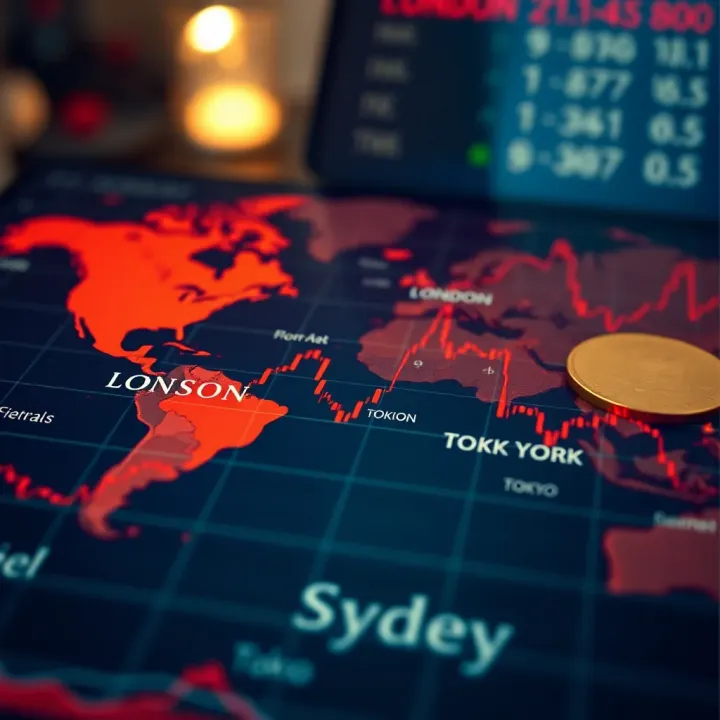
Best Time to Trade Forex in Nigeria
📈 Discover the best Forex trading times in Nigeria! Learn how global sessions and market moves impact your success for smarter trades. 💹🌍
Edited By
Isabella Dawson
Forex trading, simply put, means buying and selling different currencies aiming to make a profit when exchange rates change. Imagine you buy US dollars at ₦450 each and later sell them at ₦460. That ₦10 difference per dollar is your gain. This market operates 24 hours, unlike the local bourse, giving traders flexibility to act anytime they see opportunities.
The foreign exchange (forex) market is vast and liquid, handling trillions of dollars daily. It’s influenced by factors like government policies, economic data, geopolitical events, and market sentiment. For Nigerian traders, understanding how the naira moves against currencies like the dollar, euro, or pound is essential because this affects capital flows, import-export dynamics, and investment returns.

Many Nigerians are drawn to forex trading for the chance to earn in foreign currencies, especially when the naira faces depreciation. However, it demands technical skill, risk management, and a good grasp of market drivers.
Currency trading always happens in pairs, for example, USD/NGN or EUR/USD. You don’t buy a single currency but rather exchange one for another. If you expect the naira to weaken against the dollar, you might buy USD/NGN, hoping to sell later at a profit. If your prediction is wrong, you risk loss.
The prices you see reflect how much of one currency you need to buy a unit of the other. These rates fluctuate every second, responding to supply and demand changes worldwide.
Central Banks: Like the Central Bank of Nigeria (CBN), they intervene occasionally to stabilise the naira.
Commercial Banks: Facilitate currency exchange for businesses and individuals.
Forex Brokers: Provide platforms for individual traders to access the market.
Hedge Funds and Investment Managers: Trade large volumes based on complex strategies.
Say an entrepreneur imports goods priced in dollars. If the naira depreciates unexpectedly, import costs rise, squeezing profit margins. By trading forex strategically, they can hedge against such risks or take advantage of favourable exchange rate trends.
Understanding how forex trading operates gives you a clearer lens on economic developments and offers avenues to grow wealth if approached wisely and cautiously in Nigeria’s unique market conditions.
Understanding what forex trading means is essential for anyone interested in tapping into the global currency market. Forex trading, at its core, involves buying one currency while simultaneously selling another. Traders aim to profit from the fluctuations in exchange rates, which constantly change due to various economic, political, and market factors. For example, a Nigerian trader might buy US dollars when the naira weakens and sell when the dollar price dips, thus aiming to make a profit in naira terms.
Currency trading is the exchange of one currency for another in the hopes that the value of one currency will rise or fall relative to the other. This does not involve physically exchanging notes like changing naira for dollars at a bureau de change but rather trading digital representations of currency pairs on an electronic platform. A trader could engage in the EUR/USD pair, deciding to buy euros while selling US dollars or vice versa. This operation depends on the price movements and requires understanding market trends.
Exchange rates dictate how much one currency is worth in terms of another and directly impact trading decisions. If the exchange rate between the naira and the dollar shifts from ₦415 to ₦420, it means the naira has weakened, making the dollar more expensive. Traders watching such changes might buy dollars early and sell after the naira declines further. Exchange rate movements are influenced by factors like inflation rates, interest rates, political stability, and trade balances. For Nigerian traders, understanding these factors is vital where naira’s volatility is often affected by CBN policies and global oil prices.
One of the standout features of the forex market is its continuous operation, open 24 hours a day, five days a week. This nonstop trading occurs because forex follows the sun across time zones—from Asia through Europe to North America. For Nigerian traders, this means opportunities exist even outside local business hours. If you miss trading during Lagos’s busy hours, you can still engage with forex markets when London or New York sessions begin.
Forex trading is concentrated in key financial hubs, mainly London, New York, Tokyo, and Sydney. London leads because it overlaps with Asian and American trading times, fostering high liquidity. New York serves as a vital session coinciding with trade news releases, while Tokyo is key for Asian markets. Each centre has unique market dynamics shaped by local economies and policies. Nigerian traders benefit from knowing session hours because volatility and trading volumes shift during these centres’ active hours, influencing trading strategies.
Forex trading works because global currencies constantly fluctuate in value. Knowing what it means and how the market spans the entire day through major centres gives traders an edge, especially in Nigeria where exchange rates often move sharply.
Forex trading means exchanging currencies to profit from rate changes
Exchange rates fluctuate due to economic and political factors
The forex market is active 24/5, reflecting different global time zones
Major centres like London and New York shape when and how trading volumes rise
This foundational understanding prepares you for the more detailed workings of forex, helping you know when to trade and what drives currency shifts.
Understanding how the forex market functions is vital for anyone looking to trade currencies. It offers insights into how currency values are quoted, bought, and sold, which ultimately affects your trading decisions and profitability. Grasping the mechanics behind currency pairs, pricing, and the role of brokers can help you navigate this market with more confidence.
The forex market trades currencies in pairs, where one currency is exchanged for another. The first currency in the pair is the base currency, while the second is the quote currency. For example, in the USD/NGN pair, the US dollar (USD) is the base, and the Nigerian Naira (NGN) is the quote. This means the price shows how much ₦ you need to buy one US dollar.
This base-quote relationship is crucial because it determines how profits or losses are calculated. If the USD/NGN rate moves from ₦500 to ₦520, the dollar has strengthened against the naira, and a trader holding dollars would profit when converting back to naira. Understanding which currency is base or quote helps you know exactly what you’re buying or selling and assesses the risk involved.
When it comes to bid, ask prices, and spreads, these terms show the costs involved in trading. The bid price is what buyers are willing to pay for the base currency, while the ask price is what sellers expect to receive. The difference between these two prices is called the spread, and it represents the broker's profit margin.
For example, if the USD/NGN bid price is ₦519.50 and the ask is ₦520, the spread is ₦0.50. That spread matters because it’s a cost you pay upfront before even making any profit. The narrower the spread, the cheaper it is to trade. In Nigeria, spreads can widen during times of high volatility or low liquidity, so knowing this helps you pick the right moments to trade and the right currency pairs.
Brokers act as intermediaries between you and the forex market, providing access to trade currency pairs. Their role includes offering a platform to execute orders, providing leverage, and sometimes offering tools like charts or economic news updates. Choosing a reliable broker is critical because it affects execution speed, security of your funds, and quality of service.
In Nigeria, popular trading platforms linked to established brokers include MetaTrader 4 (MT4), MetaTrader 5 (MT5), and proprietary apps from firms like FXTM and HotForex. These platforms are user-friendly and come with built-in analysis tools, making it easier for traders to make informed decisions. Many also offer mobile versions, crucial for Nigerian traders who often access the markets through smartphones due to connectivity challenges.
To sum up, knowing how currency pairs work, understanding bid-ask spreads, and picking the right broker with a dependable platform are core to operating successfully in forex trading. These elements form the foundation that keeps your trading practical and focused on profits rather than avoidable losses.
Understanding who takes part in the forex market helps clarify how currency prices move and why opportunities arise for traders and investors. The forex market is a bustling place where various entities—from huge institutions to individual retail traders—interact. Each participant plays a distinct role, influencing liquidity, volatility, and market trends.
Central banks and governments drive major currency moves through their policy decisions and interventions. For instance, the Central Bank of Nigeria (CBN) sets monetary policies, adjusts interest rates, and at times directly intervenes in the forex market to stabilise the naira. These actions affect supply and demand for currencies, therefore altering exchange rates. When the CBN buys or sells dollars, it can cause immediate ripples in the market, impacting the positions of traders. Likewise, other countries’ central banks like the US Federal Reserve or the European Central Bank play similar roles but on a global scale.
Commercial banks and financial institutions form the backbone of forex trading. They provide the bulk of liquidity by acting as market makers and executing large currency orders for clients. Nigerian commercial banks like GTBank, Access Bank, and Zenith Bank routinely engage in forex trading for corporate clients, importers, exporters, and investors. Besides handling day-to-day currency transactions, these banks sometimes take speculative positions on behalf of clients or themselves, seeking profit from expected currency moves. Their role ensures there is a market with continuous flow, enabling both big and small traders to enter and exit trades.
Retail traders and investors are individual Nigerians participating in forex mostly through online trading platforms. This group has grown sharply over the last decade, with platforms like MetaTrader, Binomo, and local brokers facilitating easy access. Unlike the institutions, retail traders usually operate with smaller capital and follow strategies based on technical analysis or news events. For example, a Lagos-based forex trader might speculate on the USD/NGN pair using mobile data and a stable power supply. While retail trading brings opportunities for extra income, it carries risks due to market volatility and leverage, so understanding market players and their usual behaviour can help in making smarter decisions.
Knowing who participates offers practical insight into why certain currency moves happen and how Nigeria’s forex market fits into the global system. It also shows why having a clear strategy and understanding liquidity sources matter for anyone looking to trade forex seriously.
In short, forex trading is not just about guessing which way rates will go; it’s a complex interaction between powerful economic actors and everyday investors. Grasping this makes you better placed to navigate the market confidently and spot when to enter or exit trades.
Understanding the common strategies in forex trading helps traders select methods that fit their risk levels, time availability, and market understanding. These strategies provide structure for decision-making and improve chances to profit from currency movements. In Nigeria, where forex trading is growing, mastering strategic approaches brings discipline and clarity to the often volatile forex market.
Day trading and scalping explained
Day trading involves opening and closing trades within a single trading day to profit from short-term price fluctuations. Scalping takes this further by targeting very small gains in quick succession, sometimes holding positions for just minutes. These approaches require constant attention, quick decision-making, and access to reliable trading platforms. For a Lagos-based trader, scalping might mean exploiting minor changes in USD/NGN rates during peak market hours to make ₦500–₦1,000 on repeated small trades.
These short-term tactics suit traders who can monitor markets throughout the day and prefer frequent small profits over waiting. However, they demand strong discipline to avoid overtrading and careful management of spreads and commissions.
Swing trading and position trading basics
Swing trading holds currencies for days or weeks to capitalise on medium-term trends. It strikes a balance between day trading’s pace and position trading’s patience. A Nigerian swing trader might buy euros expecting a rally influenced by upcoming European Central Bank decisions, holding the position till the trend plays out.
Position trading, on the other hand, involves holding trades for months, based on fundamental analyses like economic cycles or political stability. For instance, a trader might buy the British pound anticipating a post-Brexit economic boost. This approach suits those who cannot monitor markets daily but can analyse long-term economic indicators.
Both swing and position trading reduce transaction costs and stress from constant monitoring, but require patience and a good grasp of market fundamentals.
Using charts and indicators
Technical analysis uses historical price charts and indicators like moving averages, RSI (Relative Strength Index), and MACD (Moving Average Convergence Divergence) to predict future market moves. Nigerian traders often use platforms like MetaTrader 4 or MetaTrader 5, which offer these tools. For example, spotting a moving average crossover on the USD/EUR chart might signal an entry or exit point, helping traders time their actions profitably.
Charts reveal price patterns—such as head and shoulders, double tops, or flags—that traders rely on to anticipate reversals or continuations. Effective use of these tools sharpens entry and exit timing, essential in fast-moving forex markets.
Evaluating economic news and events
Fundamental analysis focuses on economic indicators and events that influence currency values. Nigerian traders keen on the forex market watch reports like US Non-Farm Payrolls, CBN monetary policy announcements, or crude oil price changes closely. For instance, a surprise hike in Nigeria's inflation rate might weaken the naira, affecting USD/NGN trades.
Political developments, trade agreements, and global crises also sway forex markets. Traders who understand these factors can anticipate market reactions better than those relying only on charts. For example, before the 2023 Nigerian elections, forex traders anticipated naira volatility due to possible policy shifts, shaping their strategy accordingly.
Mastering both technical and fundamental analysis equips you to read the market’s pulse clearly, improving your chances of spotting profitable trades and managing risks effectively.
By blending short and long-term strategies with solid analysis, forex traders in Nigeria can navigate complexities intelligently, balancing opportunity and risk for sustainable profits.
Understanding the risks and opportunities in forex trading is key for anyone looking to participate, especially within Nigeria's unique economic and infrastructural environment. While forex offers access to global markets and potential income streams beyond local investments, Nigerian traders must navigate challenges that can impact their trading success. By recognising these factors, traders and investors can better position themselves to make informed decisions and manage risk effectively.
The naira's frequent fluctuations create a difficult landscape for forex traders in Nigeria. Since exchange rate policies and controls imposed by the Central Bank of Nigeria (CBN) limit the flow of foreign currency, traders often find it hard to get naira at official rates for forex activities. This gap between official and parallel market rates can lead to unexpected costs or losses. For example, a trader planning to convert forex profits back to naira might receive less than anticipated because of these controls.
Furthermore, when the naira loses value quickly against major currencies, traders holding positions in foreign currencies face steep volatility. This volatility can erode potential gains or increase losses, making risk management essential. Traders should stay updated on CBN policies and naira trends to avoid unpleasant surprises.
Reliable internet access and stable power supply are vital for timely forex trading. Many Nigerian traders struggle with inconsistent electricity and slow or unstable internet connections, especially outside major cities. These interruptions can delay trade executions or lead to missed opportunities during fast-moving market conditions.
Take the example of a trader in a suburban area who experiences a sudden power outage while monitoring the EUR/USD pair. Without backup power or mobile data, they might miss critical price movements affecting their open positions. Using alternative power sources like generators or power banks and ensuring backup internet options like mobile data are practical steps traders can take to minimise these disruptions.
Forex trading provides Nigerian investors with a gateway to international financial markets that are otherwise hard to reach. Unlike local stock or bond markets, the forex market operates 24 hours and features global currency pairs that reflect worldwide economic activity. This means Nigerian traders can diversify beyond the naira and Nigerian stocks, gaining exposure to the US dollar, euro, pound sterling, and other major currencies.
For instance, an investor interested in the health of the US economy can trade USD pairs to capitalise on interest rate changes announced by the Federal Reserve. This international reach also means Nigerian traders can react to global events—like Brexit or oil price shifts—that impact currency values.
In a country where traditional investments may suffer due to inflation, currency depreciation, or market limitations, forex trading offers a fresh avenue for income diversification. By engaging with forex markets, Nigerian investors are not solely dependent on the local economy but can potentially earn from currency value movements worldwide.
Moreover, the relatively low entry barriers—such as starting with small amounts on platforms like Oanda, IG, or local brokers—allow individuals to explore trading alongside their main business or employment. Of course, this requires sound knowledge and risk control, but it offers a chance to build additional revenue streams beyond conventional sources.
Forex trading can be a viable way for Nigerian investors to access global markets and diversify income, provided they clearly understand the risks posed by naira volatility and infrastructural challenges.
By weighing these risks alongside benefits, traders in Nigeria can craft strategies that fit their circumstances and make the most of the forex market's opportunities.
📈 Discover the best Forex trading times in Nigeria! Learn how global sessions and market moves impact your success for smarter trades. 💹🌍
📊 Find the best forex trading platform in Nigeria! Learn about security, fees, tools, and user experience to trade smart and avoid common risks.
Discover effective forex trading strategies 🇳🇬 tailored for Nigerian traders, focusing on risk management, analysis methods, and disciplined trading tips 📈💡.
Discover top forex trading tips, strategies, and platforms tailored for Nigerian traders 🇳🇬. Manage risks and trade smarter in today’s market 📈💡.
Based on 10 reviews