
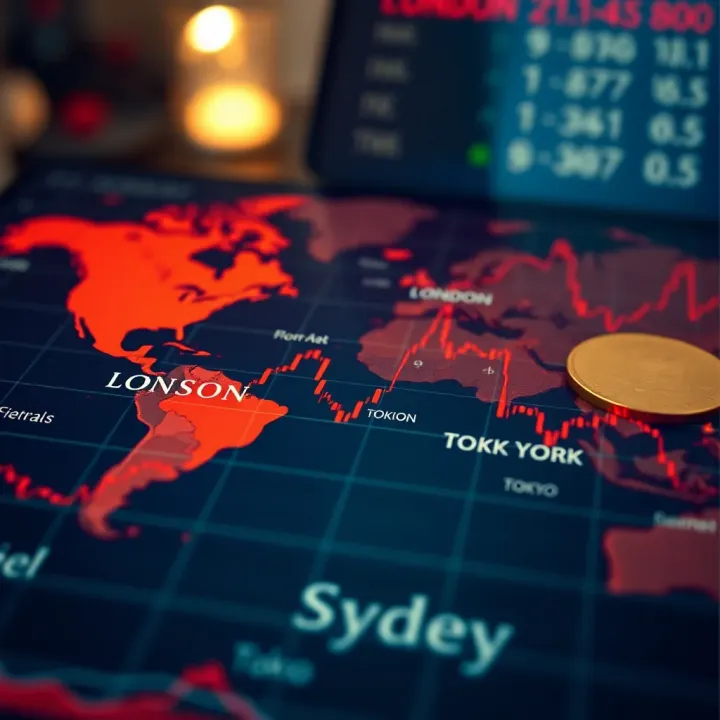
Best Time to Trade Forex in Nigeria
📈 Discover the best Forex trading times in Nigeria! Learn how global sessions and market moves impact your success for smarter trades. 💹🌍
Edited By
Emma Clarke
Trading in foreign exchange (forex) and cryptocurrency markets has become increasingly popular among Nigerian traders. Both provide unique opportunities to grow wealth, but they differ significantly in operation, risks, and accessibility. Understanding these differences is key to making smart decisions in Nigeria's financial environment.
Forex trading involves exchanging one currency for another, often major pairs like the US dollar (USD) against the naira (₦). It benefits from high liquidity, operating 24 hours on weekdays across established global markets. Nigerian traders access forex largely through regulated brokers, which often provide leverage and advanced tools. However, forex markets are highly influenced by geopolitical and economic news, requiring traders to monitor developments such as CBN policies or international trade tensions closely.
Cryptocurrency trading, on the other hand, revolves around digital currencies like Bitcoin (BTC) and Ethereum (ETH). This market runs 24/7, offering more flexibility but also exposing traders to significant volatility. For Nigerians, crypto trading is accessible through both local and international exchanges like Luno, Binance, or NairaEX. This decentralised market has grown partly because of the naira's instability and interest in alternative stores of value. Yet, the lack of clear, comprehensive regulation in Nigeria means traders must be cautious of fraud and sudden platform shutdowns.
Both markets demand an understanding of risk management, but cryptocurrency’s extreme price swings require even sharper tactics and emotional discipline.
Here are practical points for Nigerian traders:
Market hours: Forex runs Monday to Friday, crypto never sleeps.
Regulation: Forex trading is more tightly regulated by entities like the Securities and Exchange Commission (SEC) Nigeria; crypto regulation is still evolving.
Volatility: Crypto prices can move 10–20% within a day, while forex pairs generally show steadier trends.
Costs: Forex often involves spreads and swap fees; crypto may have higher transaction fees depending on the blockchain used.
Technology: Trading forex typically requires platforms like MetaTrader; crypto trading uses exchange apps or wallets, some with user-friendly interfaces for new traders.
By weighing these factors within Nigeria's unique economic context, traders can select the right market suited to their capital, risk appetite, and trading style.
Understanding the basics of forex and cryptocurrency trading sets the stage for Nigerian traders to make well-informed decisions. Both markets offer opportunities but come with distinct characteristics, risks, and operational dynamics that affect how traders engage with them locally.
Forex trading involves buying and selling currencies on the foreign exchange market. Traders aim to profit from changes in exchange rates by speculating on currency pairs. This market is highly liquid and driven mostly by global economic factors like interest rates, inflation, and political events. For Nigerian traders, forex represents a traditional and regulated avenue, often with access to leveraged trading through brokers.
Pairs generally consist of a base currency and a quote currency. The most popular pairs include majors like EUR/USD, USD/JPY, and GBP/USD. Nigerian traders also focus on USD/NGN, which reflects the naira’s exchange rate with the US dollar. Trading these pairs requires understanding their volatility and economic drivers; for example, US dollar-based pairs tend to attract more attention because of Nigeria's heavy reliance on dollar remittances and foreign trade.
The forex market operates 24 hours, five days a week, moving across major financial centres globally — London, New York, Tokyo, and Sydney. This continuous flow allows Nigerian traders to participate at various times, whether during the Lagos morning or late evening. Liquidity peaks during overlapping market hours, making it easier to enter or exit trades without major price swings.
Cryptocurrency trading deals with digital or virtual tokens maintained through blockchain technology. Unlike forex, crypto assets like Bitcoin or Ethereum aren't issued by governments but are decentralised. This appeals to Nigerian traders seeking alternative assets beyond fiat currencies, especially amid naira volatility and capital control policies.
Bitcoin remains the dominant crypto, but others like Ethereum, Binance Coin, and stablecoins such as Tether (USDT) are gaining ground. Stablecoins are particularly useful for Nigerians looking to shield their funds from naira depreciation. Local interest has grown, partly due to peer-to-peer platforms and fintech startups facilitating crypto transactions with naira.
Crypto trading runs round the clock every day, without closing hours, unlike forex. This 24/7 accessibility suits Nigerian traders who may have varying schedules or want to react quickly to sudden market moves. However, constant trading means managing risks can be tougher, demanding vigilance and solid strategies. The ability to trade anytime also encourages participation from a broad demographic, from university students to busy entrepreneurs.
Whether you prefer the more structured forex market or the dynamic world of cryptocurrencies, grasping these basics helps you navigate each space wisely and spot opportunities relevant to Nigeria’s trading landscape.
Understanding how forex and cryptocurrency markets are structured and regulated helps Nigerian traders navigate these spaces confidently. Each market's framework influences access, risk, and potential returns. Unlike the more mature forex market, crypto trading operates in a regulatory gray area locally, affecting both platforms and participants.
The Central Bank of Nigeria (CBN) oversees forex trading through licensed brokers and financial institutions. Forex trading in Nigeria is well-established with clear guidelines around capital controls, leverage, and anti-money laundering compliance. For instance, only authorised brokers registered with the Nigerian Securities Exchange Commission (SEC) may legally offer forex services. This regulatory clarity protects traders from scams and ensures orderly market operations.
Cryptocurrency regulation, however, remains unsettled. Since the 2021 CBN directive warning banks against facilitating crypto transactions, the industry faces restrictions but not outright bans on owning or trading digital assets. Many crypto exchanges operate through peer-to-peer platforms or offshore arrangements, which introduces regulatory uncertainty and risks for Nigerian traders, such as limited recourse in disputes or asset freezes.

Regulatory clarity directly impacts trader confidence and market integrity. Clear rules enable traders to plan better, avoid fraud, and manage risks. Conversely, unclear frameworks can expose traders to exploitation and increase operational challenges. For example, Nigerian traders often resort to decentralised exchanges (DEXs) or informal peer networks due to lack of straightforward regulatory approval for crypto platforms.
Forex brokers in Nigeria provide various account types, including standard, mini, and demo accounts, catering to diverse trader needs. These brokers typically offer local currency funding, leverage options aligned with CBN rules, and customer support tailored to Nigerian clients. Some popular brokers include FXTM, HotForex, and Alpari, each with user-friendly platforms and education resources suited for beginners and advanced traders.
In the crypto space, exchanges like Binance, Luno, and Quidax serve Nigerian traders by offering naira pairs and straightforward deposit options. Despite banking restrictions, fintech platforms like Paystack and Flutterwave facilitate some transactions, enhancing access. Crypto exchanges often highlight lower minimum investments, encouraging retail participation but also demanding cautious vetting due to regulatory gaps.
Mobile app access is vital since many Nigerian traders rely on smartphones. Both forex brokers and crypto exchanges offer mobile applications with real-time charts, order execution, and account management. Apps like MetaTrader 4/5 for forex and Binance Mobile for crypto deliver decent user experiences, but internet stability remains crucial. Traders must consider data costs and connectivity, especially outside major urban centres, to maintain effective trading.
Regulatory differences and platform accessibility influence how Nigerian traders engage with forex and crypto markets daily. Clear oversight offers protection and stability for forex traders, while crypto’s evolving status calls for extra caution and savvy platform choice.
Forex trading is regulated by CBN and SEC with clear guidelines.
Crypto trading lacks explicit regulation, leading to reliance on P2P platforms.
Forex brokers provide regulated account types, often with local currency support.
Crypto exchanges serve Nigerians but face banking challenges.
Mobile apps enable convenient trading but require stable internet.
Understanding these differences helps Nigerian traders make informed choices in a dynamic trading environment.
Volatility and risk profiles are essential for Nigerian traders to understand before stepping into forex or cryptocurrency markets. Volatility measures how much prices swing, while risk profiles refer to the potential losses and gains involved. Both affect trading decisions as well as how much capital traders should commit and how they plan their exits.
Forex markets, largely driven by macroeconomic indicators and geopolitical events, tend to be less volatile than cryptocurrencies. Major currency pairs like USD/NGN or EUR/USD often show gradual price changes. In contrast, cryptocurrencies such as Bitcoin or Ethereum experience sharp price swings within minutes or hours, driven by market sentiments, regulatory news, and speculation.
This difference means forex trading may suit those preferring steadier movements and longer trading windows, whereas crypto attracts traders ready for fast-paced, high-risk environments.
Forex prices react mainly to central bank policies, inflation data, and global economic shifts. For instance, when the Central Bank of Nigeria (CBN) adjusts interest rates, the naira’s exchange rate can move significantly, affecting forex trade.
Cryptocurrency markets are influenced by broader factors including tech updates, hacking incidents, and changing regulations worldwide. Nigeria’s ban on crypto exchanges in previous years also created notable market ripples, influencing trader confidence and prices temporarily.
In 2023, forex pairs like USD/NGN witnessed fluctuations linked to Nigeria’s economic recovery and petrol subsidy adjustments. These movements, although significant, occurred over days to weeks.
By comparison, Bitcoin’s price dropped nearly 20% within 24 hours in June 2023 due to global regulatory announcements affecting exchanges. Such steep, sudden shifts highlight the high volatility crypto traders must be prepared for.
Using stop-loss orders lets traders cap potential losses by automatically closing positions once a predetermined price is reached. Take-profit orders help lock in gains similarly. These tools are vital on both forex and crypto platforms to control risk, especially given sudden market swings.
For example, a trader buying USD/NGN at ₦750 might set a stop-loss at ₦740 to limit downside, and a take-profit at ₦770 to exit with gain.
Traders must adjust the size of their trades relative to their capital, avoiding risking too much on a single position. Leverage amplifies gains but also losses—using high leverage in volatile crypto markets can wipe out accounts swiftly.
Nigerian brokers often offer leverage ratios up to 1:100 in forex, but crypto exchanges might allow even higher — but this demands greater caution and strict risk management.
For Nigerian traders, naira volatility adds another layer of risk. Sudden changes in the naira-to-dollar rate can affect trading capital value and profits when funds move in and out of local accounts.
A trader who converts naira to dollars for forex trading may find gains eroded if the naira weakens before converting back. This makes timing and currency risk a critical factor to consider alongside market movements.
Understanding and managing both market volatility and associated risks are crucial for Nigerian traders aiming to protect their capital and optimise returns in volatile sectors like forex and cryptocurrency.
When trading forex or cryptocurrencies in Nigeria, technological and practical issues can’t be overlooked. These factors often determine how smoothly trades happen, the costs involved, and ultimately, your success. Traders must first understand the landscape of payment options, internet access, and the tools available to them.
Using local banks and payment gateways is central to starting and maintaining any trading account, whether forex or crypto. Nigerian banks like GTBank and Zenith Bank offer online banking services that allow traders to fund accounts directly or withdraw gains. However, not every broker supports naira-denominated accounts, which means you often have to convert naira to dollars. Payment gateways such as Paystack and Flutterwave bridge this gap by enabling seamless payment processing between local banks and international trading platforms.
Naira deposit and withdrawal challenges remain a major headache for Nigerian traders. Restrictions on forex flows and occasional forex scarcity complicate converting naira to dollars for international deposits. Withdrawal delays are common, sometimes forcing traders to await interbank settlement cycles. Plus, exchange rate fluctuations during conversion can eat into profits, especially when withdrawing to naira accounts. These realities mean traders must plan their cash flows carefully and consider working with brokers who offer flexible naira options.
Role of fintech platforms like Paystack and Flutterwave cannot be overstated. They simplify and expedite the process of funding trading accounts by connecting local payment channels to international systems. For instance, Flutterwave's RAVE platform lets users pay in naira while the recipient receives dollars or crypto directly. This seamless fund transfer reduces costs and waiting times, making it easier for Nigerian traders to stay agile and respond quickly to market moves.
Importance of reliable internet for trading stands out, especially given Nigeria's uneven network infrastructure. Forex and crypto markets operate in real-time, so even a few seconds’ lag can mean lost opportunities or unmanaged risks. Traders based in Lagos with access to fibre optics or 4G networks generally fare better than those in rural areas with spotty coverage. Many compensate with mobile data plans from providers like MTN or Glo, although stability varies.
Tools for analysis and decision-making are indispensable. Platforms like MetaTrader4 for forex and TradingView for crypto offer charts, indicators, and alarms that help traders organise data and spot trends quickly. Moreover, local Telegram groups and WhatsApp channels provide community-driven signals, though these should be used cautiously. The right toolset combined with Nigerian-market-aware analysis boosts a trader's chances of success.
Suitability of trading bots and automation depends on a trader’s experience and comfort level. Bots can execute trades faster than humans and work 24/7, crucial for crypto’s nonstop market. However, they require careful setup and monitoring to avoid costly mistakes. In Nigeria, where electricity supply is unreliable, relying solely on automation without backup plans risks losses. Many traders start manual before gradually adding automation, blending quick decision-making with tech assistance.
Successful trading in Nigeria hinges not just on market knowledge but also on navigating local tech realities like payment barriers and internet reliability.
In summary, understanding and adapting to Nigeria’s payment infrastructure, internet conditions, and available trading tools helps traders manage risks and access opportunities effectively in forex and cryptocurrency markets.
Selecting the right trading approach is essential for Nigerian traders looking to navigate forex and cryptocurrency markets successfully. This choice depends largely on individual circumstances such as financial goals, risk tolerance, and available time. Considering Nigeria’s unique economic climate—marked by naira volatility, intermittent power supply, and a growing fintech ecosystem—traders must align their strategies with local realities to boost their chances of profit and reduce avoidable losses.
Some Nigerian traders engage in forex or crypto trading primarily to generate regular income, often supplementing their salaries or business earnings. For example, a Lagos-based entrepreneur might trade forex daily to capitalise on short-term price swings, aiming for quick ₦5,000 to ₦10,000 gains per session. On the other hand, others treat trading as a longer-term investment, holding positions in cryptocurrencies like Bitcoin or Ethereum for months, betting on future growth. This method suits those with less need for immediate cash flow but with patience to weather market ups and downs.
Volatility is a hallmark of both forex and crypto markets but manifests differently. Cryptocurrency prices can plunge or spike dramatically overnight, which can be stressful if you can’t afford to lose your capital quickly. Forex generally offers more stability, although naira-related pairs can also swing significantly. Nigerian traders need to honestly assess their emotional and financial capacity to handle losses. For instance, a young professional with a tight budget may prefer conservative forex trades, while someone with disposable income might explore crypto trading, accepting sharper price fluctuations.
Trading is not a casual hobby; it demands ongoing learning and time for market analysis. Forex trading may require monitoring market news during global trading hours, while cryptocurrency markets run 24/7, pushing traders to stay alert longer. Nigerian traders juggling full-time jobs or businesses should consider how much time they can devote. Beginners might start with basic forex strategies or simple crypto investments through platforms like Binance or Luno before advancing to active trading or automation.
Nigerian traders can reduce risk by diversifying across forex and cryptocurrencies. Holding a mix of stable currency pairs and promising digital assets spreads exposure and cushions against market shocks in one sector. For example, coupling trades in the USD/NGN pair with bitcoin holdings can balance stability from forex and growth potential from crypto. This approach can be particularly valuable amid Nigeria’s economic uncertainties.
Diversification also helps manage the distinct risk profiles of forex and crypto. Forex generally offers lower but steadier returns, while crypto can deliver high profits along with heightened risk. As an illustration, a trader allocating 70% capital to forex and 30% to crypto blends steady income with speculative upside. Adjusting this mix should reflect changes in market conditions and personal risk appetite over time.
Handling both markets requires discipline and smart organisation. It helps to use dedicated trading apps—like MetaTrader for forex and Binance or Luno for crypto—to keep track easily. Setting stop-loss orders and taking profits regularly prevents emotional decisions. Also, regularly reviewing your portfolio’s performance and adapting your strategy based on naira fluctuations and global events will keep your trading relevant. Nigerian traders can benefit from fintech tools like Paystack and Flutterwave for smoother fund transfers between wallets and accounts, ensuring flexibility in managing funds across platforms.
Choosing the right approach is not just about picking forex or crypto but about aligning trading activities with your goals, resources, and the Nigerian market’s unique quirks. A well-thought-out plan helps you handle risks better and move closer to consistent profits.
📈 Discover the best Forex trading times in Nigeria! Learn how global sessions and market moves impact your success for smarter trades. 💹🌍
📊 Find the best forex trading platform in Nigeria! Learn about security, fees, tools, and user experience to trade smart and avoid common risks.
Discover effective forex trading strategies 🇳🇬 tailored for Nigerian traders, focusing on risk management, analysis methods, and disciplined trading tips 📈💡.
Discover top forex trading tips, strategies, and platforms tailored for Nigerian traders 🇳🇬. Manage risks and trade smarter in today’s market 📈💡.
Based on 9 reviews