
Forex Trading in the USA: Guide for Nigerian Traders
Learn how Nigerian traders can navigate the USA forex market with key tips on regulations, brokers, tax rules, and profitable trading strategies 📊💱🇺🇸
Edited By
Emily Harper
Forex trading, or foreign exchange trading, involves buying and selling currencies to profit from changes in exchange rates. For Nigerian traders, the forex market presents an accessible opportunity to diversify income streams beyond the usual market instruments like stocks or commodities.
The forex market operates 24 hours a day, from Monday to Friday, allowing you to trade almost anytime. This flexibility suits Nigerians juggling multiple commitments or relying on side hustles. Major currency pairs like USD/NGN, EUR/USD, and GBP/USD are frequently traded, with USD/NGN being particularly relevant due to the naira's ongoing volatility.
To start trading, you'll need a brokerage account with a reputable platform. Look for brokers regulated by recognised bodies such as the Securities and Exchange Commission (SEC) Nigeria or international authorities. Popular brokers in Nigeria include FXTM, Alpari, and HotForex, which offer user-friendly interfaces and localised customer support.
Before trading live, practise on demo accounts to understand how price movements and leverage work. Leverage can amplify profits but also losses, so it’s essential to approach this cautiously. Nigerian traders must especially be mindful of leverage’s risk, since naira depreciation can magnify potential downsides.
Here are key steps for getting started:
Open a verified trading account with a trusted broker.
Fund your account using local payment methods like bank transfer or USSD.
Study charts and basic technical analysis tools.
Begin with small trades to manage risk effectively.
Nigerian forex pros advise having a clear trading plan. Decide your entry and exit points ahead of time and stick to your strategies to avoid emotional trading.
Additionally, stay aware of local factors affecting forex, such as Central Bank of Nigeria (CBN) policies, government interventions on the naira, and global oil price movements. These elements can cause sudden shifts in currency prices.
This tutorial will guide you through practical strategies tailored to Nigeria’s unique market environment, risk management techniques to protect your capital, and how to avoid common pitfalls many beginners face.
Getting to grips with the forex market is the first step every Nigerian trader must take before risking their hard-earned ₦. Understanding how forex works helps avoid common pitfalls, know when to enter or exit trades, and recognise what drives currency movements. This foundational knowledge builds your confidence and sharpens your trading tactics.
Forex trading means buying one currency while selling another simultaneously. It’s like exchanging naira for dollars, or pounds for euros, aiming to profit from shifts in exchange rates. Nigerian traders often deal with the dollar or euro against the naira but can trade many currency pairs globally.
The forex market operates 24/5, opening on Sunday evening and closing Friday night, allowing round-the-clock access. This liquidity—when currencies can be quickly bought or sold—makes forex the largest financial market worldwide, dwarfing stock exchanges.
Currencies are traded in pairs, such as USD/NGN (US dollar to Nigerian naira) or EUR/USD (euro to US dollar). The price reflects how much of the quote currency (second currency) you need to buy one unit of the base currency (first currency). For example, if USD/NGN is 460, it means ₦460 buys one dollar.
Traders speculate on whether the base currency will strengthen or weaken relative to the quote. Central banks, investors, companies, and governments influence these movements through interest rates, economic data releases, or political events.
For Nigerian traders, USD/NGN is the most watched pair because of Nigeria’s trade and dollar reliance. Also significant are EUR/USD and GBP/USD, as businesses and investors interact with Europe and the UK.
Other pairs like USD/ZAR (South African rand) or USD/GHS (Ghanaian cedi) occasionally interest traders keen on regional dynamics. Understanding these majors and minors helps tailor strategies that factor in local economic realities and exchange rate fluctuations.
Retail traders like you and me trade smaller volumes for profit, leveraging online platforms. Meanwhile, institutions such as multinational banks, hedge funds, and corporations trade massive sums, often to hedge risks or conduct transactions.
Retail trading in Nigeria has grown swiftly thanks to accessible platforms and mobile internet, putting Nigerians alongside professionals on the global stage.
Banks act as market makers, setting prices and providing liquidity. Brokers connect retail traders to these markets, offering platforms like MetaTrader or web-based interfaces. Choosing a reliable broker is vital to avoid scams and ensure funds’ safety.
Nigerians participate actively by exchanging naira for foreign currencies, investing, or speculating. Despite challenges like naira depreciation, many use forex trading to diversify income sources. Keeping updated on global trends and local policies enhances your standing in this vast, interconnected market.
Understanding these basics equips you with a clearer picture of forex trading dynamics, making your journey towards profit more manageable and less risky.
Starting forex trading in Nigeria requires practical understanding of the local market dynamics and the technical steps involved. Knowing how to pick the right broker, set up your trading account, and use trading platforms can save you from costly mistakes and enhance your chances of making profits.
Regulation and licensing are critical when choosing a forex broker. A regulated broker follows strict rules designed to protect traders’ funds and ensure fair trading practices. For Nigerian traders, brokers authorised by reputable bodies like the Financial Conduct Authority (FCA) in the UK or the Cyprus Securities and Exchange Commission (CySEC) offer greater security. Always verify if the broker holds valid licences because unlicensed platforms might disappear with your deposits or run dodgy operations.
Next is considering broker features. Look out for tight spreads, low commissions, fast order execution, and user-friendly platforms. Also, check if the broker offers educational resources, demo accounts, and responsive customer support. For example, features like negative balance protection help limit losses beyond your deposited capital, which is crucial in volatile markets.
Among popular brokers accessible to Nigerian traders, names like FXTM, HotForex, and Exness are frequently used. They support naira deposits and withdrawals, have local payment methods, and cater to retail traders in Nigeria with beginner-friendly services. Choosing such brokers can make deposit and withdrawal processes easier, reducing delays and extra charges.
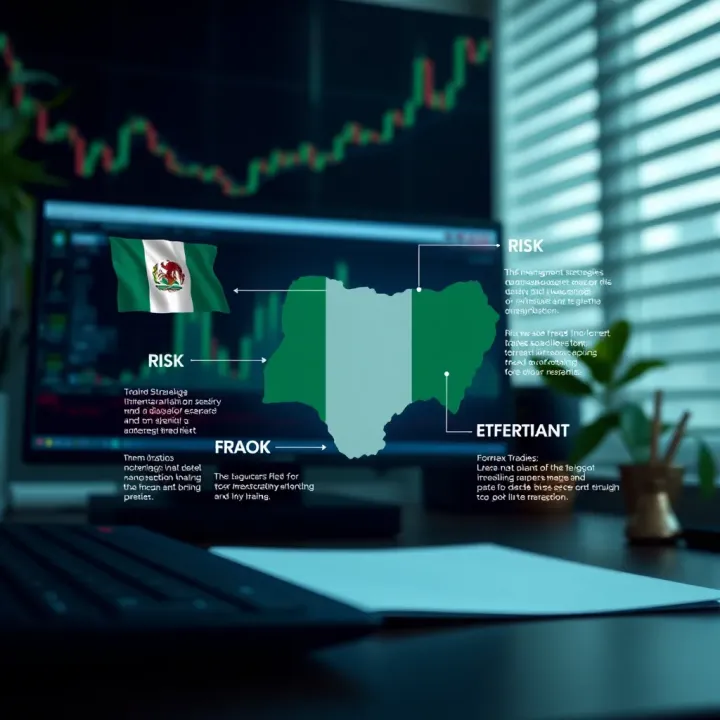
When setting up your account, understanding account types and initial deposits is key. Brokers usually offer standard, mini, and micro accounts with varying minimum deposits—some start as low as ₦10,000. Selecting the right account helps you manage risk and control how much you stake per trade.
The verification (KYC) process is mandatory. It involves submitting identification like the Nigerian National Identification Number (NIN), utility bills, or passport. This step prevents fraud and complies with anti-money laundering laws. It may slow initial access but improves overall safety.
Funding and withdrawing in ₦ should be seamless. Nigerian traders prefer brokers that accept bank transfers, USSD payments, or e-payment platforms like Paystack and OPay. Quick funding means you can enter trades without delay, while smooth withdrawals avoid the stress of money being stuck in overseas accounts.
The MetaTrader platform (MT4 and MT5) dominates forex trading globally, including in Nigeria. It offers advanced charting, automated trading (EAs), and comprehensive analysis tools. Alternatives like cTrader or proprietary broker apps might appeal to some traders. Knowing which platform suits your style helps you execute trades efficiently.
Using mobile apps for trading is common in Nigeria given the high smartphone penetration. Trading on apps lets you monitor markets and place orders anywhere, even during Lagos traffic jams or while at mama put. However, ensure reliable internet and power backup, especially during ember months when outages spike.
Finally, basic platform navigation involves learning how to open or close positions, set stop-loss and take-profit levels, and interpret chart signals. Mastery of these controls can reduce errors and enable timely reactions to market movements.
Starting forex trading the right way in Nigeria means building on solid foundations: choosing trustworthy brokers, setting up secure accounts, and mastering reliable platforms. This groundwork can spare you the common troubles many traders face.
By focusing on these essentials, Nigerian traders place themselves in a better position to navigate forex markets confidently and securely.
Understanding key forex trading concepts and strategies is essential for Nigerian traders aiming to navigate the currency market confidently. Grasping these fundamentals helps avoid costly mistakes and optimises trading performance, especially when dealing with the unique challenges of the Nigerian financial environment.
Pip, Lot, Leverage, Margin Explained
A pip measures the smallest price movement in a currency pair, often the fourth decimal place. For example, if USD/NGN moves from 450.00 to 450.01, that’s one pip. Knowing pips helps traders calculate profits and losses clearly. A lot is the standard unit size in trading; a standard lot usually equals 100,000 units of the base currency. However, many brokers offer mini or micro lots that are smaller, useful for traders with low capital.
Leverage lets traders control larger positions with a smaller amount of actual funds, amplifying both gains and losses. If your broker offers 1:100 leverage, you can trade ₦1 million with just ₦10,000 of your own money. Margin is the amount required in your account to open and maintain those leveraged positions. Traders must manage margin carefully to avoid margin calls, especially during volatile naira fluctuations.
Bid vs Ask Price
The bid price is what the market or broker will pay when you want to sell a currency pair, while the ask price is what you pay when buying. The difference between these two prices is critical because it represents the cost embedded in trading. For instance, if EUR/USD has a bid price of 1.1200 and an ask price of 1.1203, the 0.0003 difference is the spread.
Understanding bid and ask prices helps Nigerian traders decide the right entry and exit points in fast-moving markets. Knowing this also aids in evaluating broker competitiveness based on their spreads.
Spread and Commissions
The spread is the key cost of trading in forex and varies across brokers and currency pairs. Some brokers offer fixed spreads, while others have floating spreads that widen during market volatility. For Nigerian traders, tight spreads are advantageous because they reduce the upfront trading cost, especially when trading pairs like USD/NGN or EUR/USD.
Besides spreads, some brokers charge commissions per trade, which also affects profitability. Comparing these fees is crucial before selecting a broker to ensure trading costs do not erode potential gains.
Day Trading Basics
Day trading involves opening and closing trades within the same day, aiming to profit from small price movements. This strategy suits traders who can monitor markets actively during Nigerian trading hours. Since currency markets operate 24/5, aligning market sessions (e.g., London/New York overlaps) with your available time can improve decision-making.
Day trading requires discipline to stick to set stop-losses, as naira volatility can cause sudden price swings. It offers frequent opportunities but demands a solid understanding of market trends and quick responses.
Swing Trading Explained
Swing trading holds positions for several days to weeks, capturing larger price moves than day trading. This suits traders in Nigeria who may have limited time to follow markets constantly but still want meaningful profits from trend changes.
By analysing technical signs and fundamental events, swing traders enter and exit trades at strategic points. For example, a swing trader might buy USD/NGN after strong economic data suggests naira weakness, then sell when the market stabilises.
Using Technical Indicators Effectively
Technical indicators like moving averages, RSI (Relative Strength Index), and MACD (Moving Average Convergence Divergence) help traders predict price behaviour based on historical data. Nigerian traders use these tools to identify trends, overbought or oversold conditions, and potential reversal points.
Effective use means combining multiple indicators to confirm signals rather than relying on one. For instance, a trader might wait for RSI to indicate oversold conditions while a moving average crossover signals trend direction before entering a trade. This reduces risks linked to relying on lone signals.
Mastering key concepts such as pips, spreads, and trading strategies is vital for Nigerian forex traders. These form the groundwork for smarter decisions and better risk control.
By building your knowledge around these fundamentals, you become better positioned to adapt strategies to local realities like naira instability and market regulation changes, boosting your chances for consistent success.
Forex trading holds potential, but it also carries risks that can quickly erode your capital if you're not careful. Managing risk is the shield that keeps your investment safe amid the often-volatile currency market. Without it, even experienced traders can lose big and fast. In Nigeria’s fluctuating economic climate, where the naira faces regular swings, risk management becomes even more vital.
Managing risk helps you protect your existing funds and stay in the game longer. Say you enter a trade expecting the dollar to rise against the naira, but then unexpected government policy causes a sharp naira recovery. A clear risk management plan means you limit losses rather than wiping out your entire account.
Using tools like stop-loss orders allows you to set a predefined point where your trade will automatically close, limiting how much you lose if the market moves unfavourably. Similarly, take-profit orders lock in gains by closing your trade once a target price hits. These tools help you avoid staying in losing trades too long or missing out on locking profits.
Leverage amplifies both gains and losses. While brokers might offer leverage of up to 1:500, this means a little price movement swings your account value widely. Carefully understanding and using leverage protects you from devastating losses, especially in Nigeria’s unpredictable forex market where sudden events can cause violent currency jumps.
Overtrading often comes from impatience or a desire to recover losses quickly. This results in making too many trades impulsively, often ignoring your strategy or risk limits. Nigerian traders sometimes jump into multiple trades during volatile periods driven by the ember months or economic announcements. Such actions usually backfire, increasing losses instead of profits.
Ignoring economic news is risky because forex markets react sharply to interest rate decisions, inflation reports, or geopolitical events. For example, Central Bank of Nigeria (CBN) policy changes can influence the naira’s value within hours. Missing these updates leaves traders exposed to sudden market swings without preparation.
Using excessive leverage is a common trap, as it inflates potential profits but at the cost of magnifying losses. A ₦50,000 trade using 1:100 leverage controls ₦5 million worth of currency — but a 1% move against you wipes out your entire capital. Nigerian traders should start small and gradually adjust leverage with experience and capital.
Good risk management is not about avoiding risk completely but controlling it smartly so your trading lasts long enough to benefit from the markets' opportunities.
By keeping these risk principles in focus, Nigerian traders can better protect their capital and build consistent growth in their forex journey.
Trading forex successfully in Nigeria demands understanding local realities beyond just chart analysis. Practical tips tailored to Nigerian traders help navigate unique challenges and leverage local opportunities wisely. These tips cover issues like naira volatility, internet and power reliability, regulations, and payment options—factors that directly affect your trading experience and bottom line.
The Nigerian naira is known for its fluctuations, affected by factors like oil prices, government policies, and foreign exchange scarcity. These swings impact forex trades because currency pairs involving naira might react unpredictably to market news. For example, sudden naira devaluation could erode profits if you’re not managing your exposure carefully. Traders should watch CBN announcements and parallel market rates closely, understanding how naira trends might create trading opportunities or risks.
Frequent power outages and inconsistent internet access are realities many Nigerian traders face. A dropped connection or sudden blackout during an open trade can cause missed exits or slippage, which damages your capital. Nigerian traders often rely on mobile data or backup power like generators and UPS devices to maintain constant trading access. It’s wise to have contingency plans—a second internet provider or a mobile hotspot—especially when market volatility spikes.
Regulation in Nigeria’s forex space remains evolving but matters significantly. The Central Bank of Nigeria (CBN) and Securities and Exchange Commission (SEC) set rules to protect traders and curb fraud. Using regulated brokers and understanding compliance requirements (like KYC) shield you from scams. Be especially cautious of unlicensed platforms promising unrealistic returns; dealing with authorised brokers ensures safer transactions and legal recourse if issues arise.
Nigerian banks offer reliable channels for depositing and withdrawing forex funds. Transfers through NIBSS Instant Payment (NIP) or USSD codes provide convenient ways to fund your trading account without high fees. For instance, with USSD codes like 389 or *737#, you can quickly move money without internet—the kind of flexibility valuable when internet speeds falter. Bank transfers are also traceable, which adds transparency to transactions.
Digital payment solutions such as Paystack and OPay integrate with many brokers, facilitating quick deposits and withdrawals. These platforms support multiple payment options including cards, bank accounts, and wallets. Using them reduces reliance on cash payments and offers faster access to funds. Since they follow regulatory standards, they present an additional layer of security and convenience, especially for traders who prefer using mobile payments over traditional banking.
Safety when moving money in forex trading cannot be overstressed. Always verify your broker’s payment methods before funding accounts—avoid directly wiring to unknown third parties. Keep all transaction proofs and follow the broker’s withdrawal procedures strictly. Nigerian traders frequently face delays or blocked withdrawals due to incomplete documentation; keeping your verification documents ready accelerates payments. Also, diversify withdrawal routes, combining bank and e-payment platforms to reduce dependency on a single system.
Practical awareness of Nigeria’s specific forex trading environment sharpens strategy and safeguards capital. Addressing local challenges and leveraging familiar payment systems provide Nigerian traders a solid platform to compete globally.
Learning never stops in forex trading. Markets evolve, new tools appear, and economic dynamics shift constantly. Staying updated sharpens your skills, helps you adapt to new conditions, and can be the difference between profits and losses. For Nigerian traders, continued education is particularly important because of our unique market environment — naira volatility, fluctuating interest rates, and evolving local regulations.
Trusted local and online courses offer structured knowledge that builds your foundation and fills critical gaps. Local courses often adjust content to Nigerian realities, such as how exchange rate changes affect trading decisions or integrating fintech payment methods like Paystack with trading accounts. For example, platforms like Coursera and Udemy offer forex trading basics, but pairing those with Nigerian-focused webinars from established brokers or experienced traders provides practical insights unique to our market.
Besides formal courses, consider workshops organised by trading institutions or fintech companies in Lagos and Abuja. These events also provide networking opportunities to meet experienced traders face to face, helping you understand strategies that work within Nigerian market constraints such as dealing with power outages or bank transfer delays.
Following market news and analysis keeps you in tune with global and local events impacting forex prices. Nigeria’s economic indicators — inflation rates, CBN monetary policy decisions, fuel subsidy announcements — affect the naira and currency pairs involving the naira. Regularly checking sources like the Central Bank of Nigeria (CBN) reports, NGX updates, or local business news enables you to anticipate market swings.
Economic calendars listing events like US Federal Reserve meetings or oil price reports also help forex traders prepare for volatility. For instance, if crude oil prices drop sharply, the naira often weakens due to Nigeria’s oil dependency, which influences your trade entries and exits.
Joining trading communities and forums opens doors to shared knowledge, diverse viewpoints, and support. Nigerian traders active on groups on platforms like Telegram, WhatsApp, or dedicated forums exchange real-time tips about brokers that pay promptly, best times to trade around local market hours, or experiences with various payment platforms.
Communities also serve as reality checks. When volatile market rumours or scams surface, collective wisdom helps you avoid pitfalls. Engaging with fellow traders who also deal with Nigeria’s infrastructural challenges sharpens your understanding of practical trading beyond textbooks.
Continuous learning is not an option but a necessity to thrive in forex trading, especially within Nigeria’s fast-changing financial environment.
By tapping into diverse educational resources, news updates, and community support, you build resilience and sharpen your edge for long-term success in forex trading.
Learn how Nigerian traders can navigate the USA forex market with key tips on regulations, brokers, tax rules, and profitable trading strategies 📊💱🇺🇸
🌍 Discover forex trading in the UK from a Nigerian trader’s stance. Learn how Brexit affects markets, pick trusted brokers, master smart strategies, and protect your ₦ funds safely.
🤔 Wondering if forex trading is just gambling? Learn how strategy, knowledge, and risk management set Nigerian traders apart from chance in the forex market. ₦
📊 Master forex trading in Nigeria with a strong plan. Learn to set goals, handle risks, develop strategies, and adjust for local market vibes. Trade smarter with confidence.
Based on 12 reviews