
Forex Trading Basics for Nigerian Beginners
📈 Learn forex basics, trading strategies, risk control & tools. Perfect for Nigerian beginners aiming to trade currency pairs with confidence.
Edited By
Emma Clarke
Forex trading, simply put, involves buying and selling currencies with the aim of making a profit. The foreign exchange market operates 24 hours a day across different time zones, making it the most liquid and largest financial market globally.
In Nigeria, forex trading has gained popularity among traders and investors eager to diversify portfolios and tap into global markets. Unlike stock trading, forex trading revolves around currency pairs, such as USD/NGN or EUR/USD, where one currency is exchanged for another.
Remember, forex trading is not about luck but understanding market moves, global events, and proper risk management.
At its core, forex trading depends on currency value fluctuations. For instance, if you expect the US dollar (USD) to strengthen against the Nigerian naira (₦), you buy USD/NGN. If the dollar indeed gains value, you sell it back for more naira, pocketing the difference.
Traders use a broker or platform to place trades, with common Nigerian-friendly platforms including MT5, MetaTrader 4 (MT4), and some locally regulated brokers.
Pip: The smallest price move a currency pair can make, often the fourth decimal place.
Spread: The difference between buying and selling prices; your initial cost.
Leverage: Borrowed capital allowing you to control bigger positions, but it increases risk.
Lot Size: Standardised units of currency traded.
While advanced traders use complex methods, beginners might start with:
Trend following: Buying when currency moves upward, selling when it drops.
Range trading: Spotting when prices bounce between support and resistance levels.
Managing risk means setting stop-loss orders to limit potential losses and never risking more than a small percentage of your trading capital on one trade.
Understanding these basics is critical before committing your hard-earned naira. Next tomorrow, we will explore the practical steps Nigerians can take to open trading accounts and make their first trade with confidence.
Understanding the forex market is the first step to becoming a confident trader or investor, especially in Nigeria where access to global financial markets is growing steadily. This section gives you clear insight into what forex trading involves, who participates, and how currencies are exchanged daily. It also sets the stage by explaining Nigeria’s unique position within the larger global forex market.
Forex trading means buying one currency while selling another simultaneously. It's the action behind everyday currency exchange—from travellers swapping US dollars for naira, to multinational firms repatriating profits or hedge funds speculating on currency fluctuations. For individual traders in Nigeria, forex trading can offer a way to profit by predicting how currency values move against each other.
The forex market is like a crowded marketplace where different players come to trade. It includes large banks, central banks such as the Central Bank of Nigeria (CBN), hedge funds, multinational companies, brokers, and retail traders. Each participant has distinct motives: banks handle international payments, corporations manage currency risk, and retail traders look to profit from short-term price movements.
Currencies trade in pairs—like USD/NGN or EUR/USD—reflecting how much of the quote currency you need to buy one unit of the base currency. These trades happen over electronic platforms open 24 hours from Asia to America, driven by demand and supply influenced by economic data, political events, and market sentiment. For example, when Nigeria releases a favourable inflation report, the naira might strengthen against the dollar, affecting trade volumes.
The global forex market is the largest financial market by volume, with over US$6 trillion traded daily. Its massive liquidity means traders can enter and exit positions quickly, even with large amounts. This level of activity is unmatched by stock markets and ensures tighter spreads and better pricing for those who know how to navigate it.
Currency values react swiftly to global news. Political tensions, central bank decisions like CBN's rate adjustments, or economic data from the United States can cause significant shifts. For instance, tensions in oil-producing regions often lead to naira volatility due to Nigeria's dependence on oil exports. Traders must watch international headlines closely as these events can create opportunities or risks.
Nigeria's forex market has seen growing participation particularly from retail traders thanks to mobile trading apps and accessible brokers. Still, regulations from the CBN shape how Nigerians trade forex, including restrictions on currency pairs and capital flows. As a result, many traders also engage the parallel market or use brokers offering USD/NGN pairs. Understanding these local nuances is vital for anyone aiming to trade forex within Nigeria profitably and legally.
Forex trading in Nigeria is not only about global currency moves but also about navigating local market structure and regulations. Proper knowledge helps turn market volatility into opportunity rather than risk.
Starting with a solid grasp of this overview allows traders and investors to build strategies grounded in market realities both globally and at home.
Getting familiar with key forex trading concepts and terminology is fundamental for anyone serious about making informed decisions in the foreign exchange market. These terms aren't just jargon; they shape how traders analyse markets, manage trades, and understand price movements. By grasping these basics, you build a solid foundation that helps reduce costly mistakes and enhances your chances of success.
The forex market always deals in currency pairs. That means you’re trading one currency against another. The first currency in the pair is called the base currency, and the second one is the quote currency. For example, in USD/NGN (US dollar to Nigerian naira), USD is the base while NGN is the quote. When you place a buy trade on USD/NGN, you’re basically buying US dollars by selling Nigerian naira.
This relationship matters because all price quotes reflect how much of the quote currency is needed to buy one unit of the base currency. So if USD/NGN is quoted at ₦780, it means ₦780 buys 1 US dollar. Understanding this helps you know exactly what you’re buying or selling.
Currency pairs are categorised into major, minor, and exotic pairs. Major pairs include the world’s most traded currencies against the US dollar, like EUR/USD (euro/dollar), GBP/USD (British pound/dollar), or USD/JPY (dollar/Japanese yen). These pairs enjoy high liquidity and tighter spreads, making them popular with traders.
Minor pairs involve currencies traded against each other but exclude the US dollar, for example EUR/GBP or GBP/JPY. These tend to have slightly wider spreads but still decent liquidity. Exotic pairs mix a major currency with a smaller or emerging market currency, like USD/TRY (dollar/Turkish lira) or USD/NGN. Exotic pairs often have lower liquidity and experience more volatility — that means higher risk but potentially bigger rewards.
Every trade involves a bid price, an ask price, and a spread. The bid price is what a buyer is willing to pay for a currency pair, while the ask price is the seller’s price. The difference between these two prices is the spread, which effectively acts as a cost for entering a trade. For example, if the USD/NGN bid is ₦779.80 and the ask is ₦780.20, the spread is ₦0.40. Smaller spreads save you trading costs.
Next, pips and lots measure price change and trade volume respectively. A pip stands for "percentage in point" and generally means the smallest price move a currency pair makes, often the fourth decimal place (0.0001) for most majors. For USD/NGN, due to the large price value, the pip size can be different but traders adjust accordingly.
A lot is a fixed quantity of currency units you buy or sell. The standard lot covers 100,000 units of the base currency, but smaller lot sizes (mini or micro lots) are available for beginners.
Finally, leverage and margin are critical but risky tools. Leverage lets you control a larger position than your actual deposit. For instance, with 50:1 leverage, you can trade ₦5 million with only ₦100,000 in your account. But leverage magnifies both gains and losses. Margin is the amount of your own money that you must set aside to open a leveraged position. It's your security deposit.
Using leverage carelessly can wipe out your capital quickly, especially in volatile markets like forex. Smart traders use moderate leverage and tight risk controls to protect their funds.
Understanding these concepts helps you read price movements clearly, know your costs, and manage risk effectively. This knowledge is the backbone of successful forex trading, especially in Nigeria’s dynamic market.
To truly make gains in forex trading, you need to understand the practical steps involved. This section sheds light on real trading experiences, from choosing the right broker to mastering execution through various orders and tools. Knowing how things operate daily helps traders avoid common mistakes and seize opportunities with confidence.
Picking a trustworthy broker is the foundation of your forex trading journey. In Nigeria, brokers regulated by bodies like the Securities and Exchange Commission (SEC) offer better protection against fraud or platform failures. Also, check if the broker provides local payment options such as bank transfers or local card payments. For example, brokers supporting payments through GTBank or Access Bank make deposits and withdrawals much easier, eliminating complex foreign currency transactions.
Most Nigerian traders prefer MetaTrader 4 or 5 because of their user-friendly interface and robust features. These platforms allow access to real-time forex charts, automatic trading via expert advisors (EAs), and quick order execution. Aside from MetaTrader, some brokers offer web or mobile apps customised for Nigerian users, which cater to traders who rarely sit in front of desktops but still want a smooth trading experience on the go.
Opening a trading account usually involves submitting identification documents such as your National Identification Number (NIN) and proof of address. Nigerian brokers ask for these to comply with local regulations and anti-money laundering policies. Many brokers offer demo accounts where beginners can practice without risking real money. Transitioning from a demo to a live account involves funding your account, often with a minimum deposit ranging from ₦10,000 to ₦50,000 depending on the broker.
Placing the right type of order matters when trading forex. Market orders execute trades immediately at the current price, suitable when you want to enter or exit quickly. Limit orders allow you to set a preferred price to buy or sell, useful for getting better deals without constantly monitoring the market. Stop-loss orders help manage risk by automatically closing a trade if prices move against you beyond a set point — a vital tool in protecting your capital especially during volatile sessions.
Charts tell the story of price movement over time and are key tools for traders. Understanding chart types like candlestick or line charts helps you spot trends and highs or lows. Price action focuses on analysing recent price changes without relying on many indicators, offering insights on when prices might reverse or continue. For instance, a bearish engulfing candle after an uptrend may signal a reversal, prompting traders to exit or short a position.
Forex markets run 24/5 but not all hours are equally active. The overlap between London and New York sessions tends to have the highest volume, so timing trades during this window could improve liquidity and reduce spreads. Nigerian traders often watch economic calendars for events like CBN policy meetings or US Non-Farm Payroll releases. Trading close to such events demands caution as sudden price swings can occur, but it also presents chances for sharp profit if timed well.
Practical understanding of these steps helps traders navigate the forex market efficiently and reduces the chances of costly errors.
By mastering the practical side—broker selection, platform navigation, order execution, chart reading, and strategic timing—you’re better equipped to trade wisely and build lasting success in Nigeria’s growing forex market.
Successful forex trading leans heavily on well-chosen strategies. While the market is influenced by countless factors, traders mainly rely on two approaches: fundamental and technical analysis. These methods help make informed decisions, reduce guesswork, and manage risks effectively.
Fundamental analysis looks beyond price charts to assess the real-world forces shaping currency values. Economic indicators like interest rates, inflation, and employment data reveal a country’s financial health. For example, if Nigeria's inflation rate spikes unexpectedly, the naira may weaken against other currencies because it signals reduced purchasing power.
Central bank policies also weigh heavily. The Central Bank of Nigeria (CBN), through its monetary decisions, can either strengthen or weaken the naira. When the CBN raises interest rates, it can attract foreign investment, boosting the naira’s value. Conversely, loosening policy or printing more currency can cause depreciation. Traders watch these moves closely to time entries and exits.
Global political and economic news adds another layer. Events like trade agreements, elections, or geopolitical tensions influence market sentiment almost immediately. For instance, heightened tensions between major economies can lead to risk aversion, pushing investors towards safer currencies like the US dollar or Swiss franc. Staying updated on such news helps traders anticipate volatile swings.
Technical analysis focuses on price movements and patterns instead of economic data. A key tool here is identifying support and resistance levels. Support is the price at which demand tends to stop a currency from falling further, while resistance marks where selling pressure halts a rise. For example, if the USD/NGN pair repeatedly falls close to ₦460 but bounces back, ₦460 is a support level traders monitor.
Common indicators like the Relative Strength Index (RSI) or Moving Averages simplify market trends. RSI measures if a currency is overbought or oversold, guiding decisions on potential reversal points. Moving averages smooth out price swings to highlight the prevailing direction. These tools help traders spot moments to buy or sell, especially in fast-moving Nigerian markets impacted by local and global factors.
Chart patterns also feature prominently. Patterns such as head and shoulders, flags, and double tops signal possible trend reversals or continuation. Spotting a ‘double top’ formation in the EUR/USD price action could warn a trader that upward momentum might be losing steam, encouraging a cautious approach.
Combining fundamental and technical analysis serves most traders well. While fundamentals reveal the 'why' behind price action, technical tools show the 'when' and 'where' to act. In Nigeria’s dynamic forex ecosystem, mastering both approaches builds a more resilient trading edge.
Managing risks is fundamental in forex trading, especially in Nigeria's volatile market environment. Protecting your capital ensures you stay in the game longer and avoid significant losses that can wipe out your trading account. Good risk management acts like a safety net, helping you navigate uncertainties like sudden market swings caused by global events or local economic shifts.
Leverage allows you to control a large position with a relatively small amount of capital, but it works both ways. While it magnifies profits when trades go your way, it equally amplifies losses when the market shifts against you. For instance, with 1:100 leverage, a ₦10,000 investment effectively lets you trade ₦1,000,000. If the market moves just 1% against your position, you stand to lose all your initial investment quickly.
Given this, beginners should approach leverage cautiously. Safe leverage ratios typically range from 1:10 to 1:20, allowing some room to breathe without exposing your capital to excessive risk. Nigerian traders often make the mistake of using too high leverage, lured by potential big gains, but this usually leads to rapid account depletion. Starting low gives you time to understand market behaviour and fine-tune your strategy.
Stop-loss orders act as an automatic brake for your trades. By setting a stop-loss, you limit how much you can lose on a single trade. For example, if you buy USD/NGN at ₦460 and set a stop-loss at ₦455, your loss will stop if the price drops to ₦455. This tool protects you from unexpected market turns without needing constant monitoring.
Position sizing is another vital technique. It means calculating how much of your capital to risk on each trade to avoid overexposure. A common rule is to risk only 1–2% of your total trading capital per trade. So, with a ₦100,000 account, you risk ₦1,000–₦2,000 per trade. This approach spreads risk and prevents a single loss from affecting your overall portfolio heavily.
Setting realistic profit targets keeps your expectations grounded and helps maintain discipline. Instead of aiming for unrealistic returns like doubling your money overnight, focus on reasonable gains aligned with your risk level. For instance, targeting a 2% profit on a trade when risking 1% is a conservative and sustainable approach.
Emotional trading is a common pitfall where losses or gains lead to irrational decisions. Fear and greed often cause traders to close profitable trades too early or hold losing positions hoping for a turnaround. Staying disciplined by following your trading plan reduces such emotional errors.
Overtrading and chasing losses tend to happen when traders react impulsively to recover lost funds. For example, after a losing trade, a trader might increase position size recklessly or enter multiple trades in quick succession. This behaviour usually worsens losses. Sticking to a structured trading routine and taking breaks when needed helps prevent these mistakes.
Managing risks is not just about protecting money but also about protecting your mindset and future in forex trading. Applying these principles can make your trading journey steadier and more successful.
Starting forex trading in Nigeria involves some unique considerations compared to other markets. Understanding the local landscape, from broker choices to regulatory requirements, helps you avoid pitfalls and build a strong trading foundation. By focusing on accessible platforms, complying with Nigerian rules, and adopting practical learning steps, you increase your chances of sustainable success.
Choosing a regulated broker is paramount. Regulated brokers operate under supervision from authorities like the Securities and Exchange Commission (SEC) or international bodies, ensuring your funds are safer and trading practices transparent. Unregulated brokers often lack accountability, raising risks of fraud or withdrawal problems, especially in the Nigerian market where scams have made rounds severally.
Apart from regulation, check for brokers that offer local payment and withdrawal options. Nigerian traders benefit greatly when brokers support Naira deposits through bank transfers, USSD, or popular platforms like Paystack and Flutterwave. This avoids high forex conversion fees and delays common with international payment methods. For example, a trader funding an account via bank transfer in Nigeria usually sees funds reflected faster than wire transfers from outside the country.
The Central Bank of Nigeria (CBN) has clear rules on forex trading to protect local investors and prevent foreign exchange abuses. For instance, the CBN restricts the use of Naira for certain offshore forex trades, so working with brokers authorised to operate within this framework avoids regulatory clashes. Regulatory adherence also builds confidence with banks when processing payments related to trading.
When it comes to taxes, profits earned from forex trading must be reported to the Federal Inland Revenue Service (FIRS). Nigerian tax law treats these gains as business or investment income. Failing to report profits can lead to penalties or legal issues, so maintain accurate records of your trades and gains. Using platforms with good transaction histories helps when filing tax returns.
Starting with demo accounts is one of the best ways to enter forex trading without risking real money. Demo trading platforms simulate real market conditions, allowing you to test strategies and understand how trades execute. Many Nigerian beginners overlook demo practice and jump straight into live trading, often losing money due to lack of experience. Taking the time to master demo accounts builds confidence and sharpens skills.
Continuous learning and practice remain vital. The forex market shifts based on global news, CBN policy changes, and other economic events that affect currency prices. Following trusted Nigerian financial news sources, taking courses, and practising regularly keeps you sharp. Remember, forex trading is not a quick road to riches but a skill you develop over time with patience and discipline.
Always choose brokers who are regulated and support Nigerian payment methods, understand local rules, report profits correctly, and use demo accounts before real trading. These steps help build a safer and more informed forex trading journey in Nigeria.
Starting your forex trading journey the right way means combining knowledge with practical steps tailored to local realities. It sets you up for smarter decisions and better capital protection as you navigate the global currency markets from a Nigerian perspective.
📈 Learn forex basics, trading strategies, risk control & tools. Perfect for Nigerian beginners aiming to trade currency pairs with confidence.
📈 Learn forex trading basics in Nigeria—understand currency markets, key players, strategies, risks, tools, and local regulations to trade smartly.
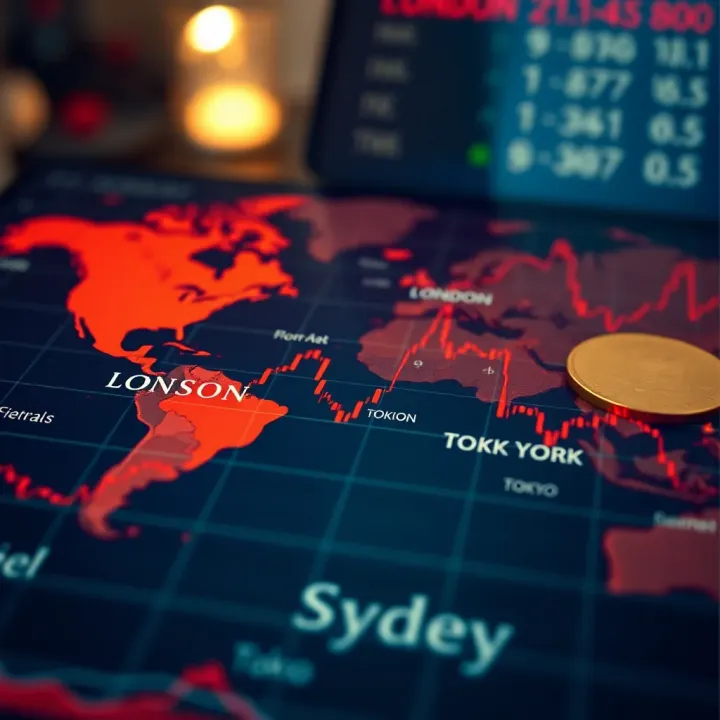
📈 Discover the best Forex trading times in Nigeria! Learn how global sessions and market moves impact your success for smarter trades. 💹🌍
📊 Find the best forex trading platform in Nigeria! Learn about security, fees, tools, and user experience to trade smart and avoid common risks.
Based on 13 reviews