

How to Convert Decimal Numbers to Binary
Learn how to convert decimal to binary with simple steps and examples 👨💻. Essential for tech, finance, and computing in Nigeria's digital age 🇳🇬.
Edited By
Amelia Clarke
Converting decimal numbers to binary is a fundamental skill, especially for traders and entrepreneurs dealing with digital transactions or analysing tech-driven markets. Binary, which uses only 0s and 1s, is the language computers understand inside and out. Understanding how decimals turn into binary helps you grasp things like digital wallets, encryption, and even coding logic behind fintech apps like Paystack or Flutterwave.
At its core, decimal is base-10—think of the everyday number system we use—while binary is base-2. Each binary digit represents a power of two, starting from the right with 2⁰ (which equals 1). When you convert decimal to binary, you essentially rewrite the decimal number as a combination of these powers of two.

Knowing to convert decimal numbers manually strengthens your understanding of how digital systems store and process values, especially when working with data or automating trades.
In this article, we’ll break down the process step by step, starting with whole numbers before moving to fractional decimals. You'll also get realistic examples drawn from practical scenarios, like handling financial data or analysing coding logic for automated trading bots. Practicing this skill sharpens your numerical fluency and connects you closer to the tech backbone behind Nigeria’s fast-growing digital economy.
Next, we'll explore the quick steps to change any decimal number into binary, making it easier to read binary outputs from any computing platform or software you might work with. You’ll also see why this matters outside pure tech fields—like understanding encryption basics or handling data reports.
Understanding these basics empowers entrepreneurs, analysts, and traders alike to navigate digital interfaces confidently and interpret numbers with precision, which is key in our increasingly digital financial and business environment.
Understanding the difference between decimal and binary number systems is key when converting numbers from one form to another. This knowledge helps traders, investors, and entrepreneurs grasp how digital data represents financial figures, which is essential in today’s technology-driven markets.
The decimal system is what most people use daily. It is a base-10 system, meaning it uses ten digits, from 0 to 9. Every digit’s position in a number reflects a power of 10. For example, the number 345 means 3×10² + 4×10¹ + 5×10⁰. This system fits naturally with human counting because we have ten fingers. When you look at prices on the stock market or the amount in your bank account, it’s the decimal system in action.
The binary system, by contrast, is base-2 and only uses two digits: 0 and 1. Each position in a binary number reflects a power of 2. For instance, the binary number 1101 translates to 1×2³ + 1×2² + 0×2¹ + 1×2⁰, which equals 13 in decimal. Although this seems unusual at first, binary suits the digital world perfectly because it simplifies decisions to on or off, yes or no, much like an okada rider chooses between stop and go at traffic lights.
Computers operate using electrical circuits that recognise two states: presence of voltage or absence of it. Representing data in binary with 0s and 1s fits this model seamlessly. It enhances reliability since the circuits only need to differentiate between two levels, reducing the chance of errors compared to more complex number systems. This simplicity helps computers process vast amounts of information quickly and efficiently, allowing fintech platforms and trading algorithms to run without hiccups.
Remember, while decimal numbers connect with our daily life, binary is the language machines speak behind the scenes.
Grasping these systems lays the groundwork for understanding how decimal numbers convert to binary, which has practical effects in software development, electronic trading systems, and data encryption. It’s more than just maths—it’s understanding the foundation that powers modern financial technology tools.
Converting whole decimal numbers to binary is a fundamental skill for traders, analysts, and entrepreneurs dealing with computing or digital systems. It allows you to understand how computers interpret numbers, which can be handy for evaluating fintech algorithms, cryptography tools, or even certain software processes you encounter in the business world. The process is systematic and hinges on dividing the decimal number and tracking what’s left over at each step.
The first step involves dividing the decimal number by two. This is because binary is a base-2 system, so every digit in binary represents an increasing power of two starting from the right. You perform this division repeatedly, each time focusing on the quotient from the previous division until the quotient drops to zero.
For instance, let’s convert the decimal number 45. First, divide 45 by 2, which gives a quotient of 22 and a remainder of 1. This division step is vital because each remainder we find corresponds to a binary digit (bit). Be mindful, this division can be done mentally or with a calculator for bigger numbers, but writing down the quotients and remainders keeps the process clear.
After each division by two, you record the remainder. Remainders can only be 0 or 1, which fits neatly into the binary system. These remainders build up the binary number's digits, but they are noted from the division steps starting with the first.
Using the example above, you continue:
22 ÷ 2 = 11, remainder 0
11 ÷ 2 = 5, remainder 1
5 ÷ 2 = 2, remainder 1
2 ÷ 2 = 1, remainder 0
1 ÷ 2 = 0, remainder 1
Each remainder is a bit in the binary number. Keep this list until you finish dividing.
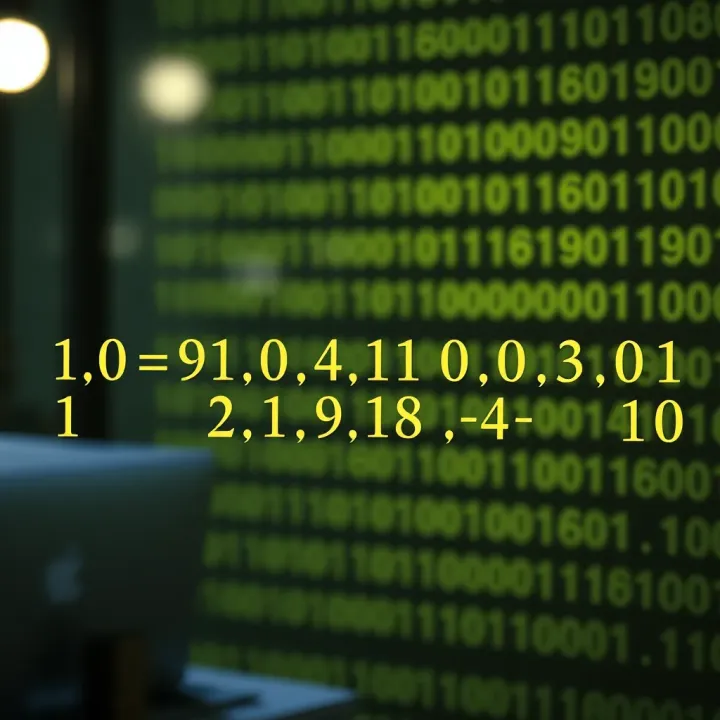
The binary number forms by reading the remainders backward, from the last remainder recorded to the first. This reversal is critical because the first remainder corresponds to the least significant bit (LSB), and the last remainder corresponds to the most significant bit (MSB).
From the example, the remainders recorded are: 1, 0, 1, 1, 0, 1. Reading them backward gives 101101, which is the binary form of decimal 45.
Understanding this reversal helps avoid common mistakes and clarifies why binary digits appear in seemingly ‘reverse’ order during calculations.
In practice, mastering these steps means you can convert any whole decimal number into binary without confusion. Whether you’re assessing data encryption methods or just curious about how digital devices work, this knowledge builds your confidence in handling numbers beyond the everyday decimal system.
When you next come across numbers in digital formats, you will know exactly how to break them down and see behind the scenes, just like using a calculator but with a deeper understanding that can separate you as a savvy trader or analyst.
Understanding how to convert decimal fractions to binary is essential, especially in trading and financial analysis where precise calculations matter. Fractions like 0.625 in decimal represent values smaller than one but are common in stock prices, interest rates, or currency exchange rates. Converting these correctly ensures accurate binary representation required by computing systems and analytic software.
Start by isolating the fractional part of the decimal number. Multiply this fraction by two. For example, with 0.625, multiply 0.625 × 2 = 1.25. This multiplication helps to determine the first digit after the binary point. The whole number part of the result (here, 1) becomes the next binary digit.
After multiplying, identify the whole number part of the result. This digit, either 0 or 1, represents the current binary digit for that fractional place. In our example, the whole number part is 1, so the first binary digit after the point is 1. Remove this whole number part from the result, leaving just the fractional remainder to continue processing.
Use the remaining fractional part and repeat the multiply-and-extract process until you reach the desired binary precision or the fractional part becomes zero. For 0.625:
First multiply: 0.625 × 2 = 1.25 → digit: 1, remainder: 0.25
Second multiply: 0.25 × 2 = 0.5 → digit: 0, remainder: 0.5
Third multiply: 0.5 × 2 = 1.0 → digit: 1, remainder: 0
The binary fraction is then 0.101.
Note that some decimal fractions do not convert neatly and repeat endlessly, requiring you to decide the binary precision needed based on your application's tolerance for rounding.
This method guarantees an accurate binary equivalent for decimal fractions, a critical step for traders, investors, or analysts depending on digital systems. Applying these steps ensures your calculations preserve financial data integrity when systems rely on binary operations behind the scenes.
Understanding how to convert decimal numbers to binary is much easier with practical examples. This section focuses on clear cases, helping you see the process in action for whole numbers, fractions, and numbers combining both parts. Knowing these examples makes it simpler to apply the method in real trading systems, programming logic, or technical analysis software.
Converting a whole number from decimal to binary involves dividing by two repeatedly and noting the remainders, which form the binary digits. For example, to convert decimal 19:
Divide 19 by 2, quotient 9, remainder 1
Divide 9 by 2, quotient 4, remainder 1
Divide 4 by 2, quotient 2, remainder 0
Divide 2 by 2, quotient 1, remainder 0
Divide 1 by 2, quotient 0, remainder 1
Reading the remainders from last to first gives 10011 in binary. Traders and analysts might use this when programming custom algorithms that require binary inputs or flags, where knowing binary equivalents simplifies the task.
Decimal fractions convert by multiplying the fractional part by 2 and extracting the integer portion at each step. Suppose you want to convert 0.625:
Multiply 0.625 by 2 = 1.25; take the integer 1
Multiply 0.25 by 2 = 0.5; take the integer 0
Multiply 0.5 by 2 = 1.0; take the integer 1
Stop here as we reached zero remainder; the binary fraction is 0.101. This method is handy in financial modelling when dealing with decimal interest rates or probabilities that convert to binary for digital display or computation.
Many numbers have both whole and fractional parts, requiring both methods combined. For instance, converting 13.375:
Whole number (13) converts to binary as 1101
Fraction (0.375) converts using multiplication steps:
0.375 × 2 = 0.75 (integer 0)
0.75 × 2 = 1.5 (integer 1)
0.5 × 2 = 1.0 (integer 1)
So, the fractional part is 0.011. Putting together, 13.375 in binary is 1101.011.
Remember, being able to convert mixed numbers accurately benefits coding, algorithm design, and understanding how digital machines read values.
With these clear examples, the practical side of decimal to binary conversion becomes straightforward. It does not just aid computer scientists but also helps traders and investors who use advanced programming tools or financial software that relies on binary data under the hood.
Speed and accuracy matter when converting decimal to binary, especially in fast-paced environments like trading and financial analysis. Leveraging tips and tricks can drastically cut down the time you spend on these conversions. Whether you’re analysing data streams or developing fintech tools, knowing quick methods for decimal-to-binary translation supports better decision-making and smoother workflows.
One efficient way to speed up conversion is by memorising the binary equivalents of common decimal numbers, especially those frequently encountered in computing or programming tasks. For instance, the decimal number 10 translates directly to 1010 in binary, while 15 is 1111. These familiar values serve as building blocks to translate larger numbers faster. Traders working with algorithms or analysts writing scripts will benefit from internalising these patterns because it reduces the need for constant recalculation.
You might start with memorising numbers from 1 to 16, which covers the most basic hexadecimal values often used in coding. This foundation aids in recognising patterns quickly during your calculations or coding routines.
Repetitive conversions call for shortcuts beyond simple memorisation. One practical shortcut involves recognising powers of two. If you know that 8 in decimal is 1000 in binary because 8 equals 2³, you can break down more complex numbers. For example, to convert 26, split it into 16 + 8 + 2, which corresponds to 2⁴ + 2³ + 2¹ — then write 11010 in binary. Breaking decimals into sums of powers of two minimises lengthy division or multiplication steps.
Also, grouping bits in sets of four (nibbles) makes spotting values easier. This approach is especially handy when working with longer binary numbers, as it simplifies mental handling and minimises errors common during longer string calculations.
Technology serves as a huge help in making decimal-to-binary conversion less tedious and error-free. Numerous online calculators and smartphone apps can convert numbers instantly, which proves useful during high-pressure situations where time is limited. Moreover, some programming languages like Python come with built-in functions (e.g., bin()) that convert decimal numbers to binary directly, saving effort and improving accuracy.
In Nigeria’s fintech space, where platforms like Paystack and Flutterwave handle many transactions, integrating such automation tools can speed software development and testing. Instead of manually converting values, developers can rely on these utilities to handle number format conversions securely and reliably.
Quick conversion skills paired with technology create a powerful combo, eliminating unnecessary delays and ensuring precision which is essential when timing is everything.
Applying these tips elevates your ability to convert decimal numbers to binary efficiently. For analysts, traders, or developers in Nigeria's vibrant tech and financial sectors, mastering these tricks offers a practical edge.
Decimal to binary conversion is not just an academic exercise; it plays a significant role in practical technological applications that directly affect business and technology sectors. Understanding this conversion helps traders and investors appreciate how data and commands are processed behind the scenes, especially in electronic devices and digital platforms.
Computer programming relies heavily on binary numbers because computers operate through switches that are either on or off, represented by 1s and 0s respectively. Knowing how to convert decimal numbers to binary allows developers and engineers to work more closely with machine-level instructions. For example, writing assembly code or debugging hardware requires this understanding. Beyond programming, electronics such as microcontrollers and embedded systems use binary to process signals, controlling everything from automated teller machines (ATMs) to sophisticated Nigerian fintech platforms like Flutterwave or Paystack.
In digital communications, binary conversion is fundamental. Data transfer protocols rely on binary encoding to transmit information efficiently. For traders and brokers, knowing that stock market data or exchange rates pass through binary-coded messages highlights the importance of accuracy in numerical representation. Packet switching, error checking, and encryption also depend on binary forms. Nigerian telecom companies like MTN and Airtel depend on these concepts to ensure calls, text messages, and mobile money transactions get through without errors.
For students and professionals, especially those involved in IT, finance, and engineering, grasping decimal to binary conversion builds a foundation for advanced skills. It demystifies how computers and digital devices work, aiding in problem solving and innovation. For instance, a software developer improving backend systems for trading platforms needs to understand binary logic to optimise performance. Additionally, training institutions often emphasize this topic as it comes up frequently in professional exams and certifications. It is a critical skill that supports careers across numerous high-demand sectors in Nigeria.
Learning decimal to binary conversion opens doors to deeper technical knowledge and practical problem solving, benefiting anyone involved with digital technology or financial systems.
In sum, being competent in decimal to binary conversion links directly to improved understanding of the underlying mechanics of computing, digital communication, and professional growth. This knowledge is an asset in today’s tech-driven Nigerian economy, offering better control over the tools and systems that shape trading, investing, and entrepreneurship.
Learn how to convert decimal to binary with simple steps and examples 👨💻. Essential for tech, finance, and computing in Nigeria's digital age 🇳🇬.

Learn how to convert decimal numbers to binary step-by-step 🧮. Master manual methods, clever shortcuts, and digital tools—perfect for Nigerian tech learners!
Learn how to convert decimal numbers to binary with step-by-step methods and clear examples 📊 Practical guide perfect for Nigerians keen on computing and digital tech 🎯
Learn how to convert binary to decimal with clear steps, examples from computing and daily life, plus simple techniques including positional value and digital tools 💻🔢
Based on 10 reviews